Picking the best trees for Rochester NY starts with the weather, the soil, and the spot you plan to plant, not with what looked good at the nursery in May. A tree that thrives in Virginia or Oregon may spend ten years sulking here, then lose half its crown in one lake effect ice storm.
This guide covers what the Rochester area asks of a tree, which species tend to hold up well in Monroe County yards, which ones to skip, and how to plant so the tree has a real chance. If you are unsure about a particular spot, you can always ask a crew to take a look, and we are happy to talk through what grows well where.
What Rochester Asks of a Tree
Rochester sits on Lake Ontario, and the lake shapes everything. Winters bring lake effect snow, ice storms, and strong winds. Summers can bring heavy thunderstorms. Many neighborhoods have heavy clay soil that stays wet in spring and bakes hard in a dry August. Road salt along streets and driveways adds one more stress.
A good tree here has strong wood, a sturdy branching pattern, and a tolerance for wet feet or compacted ground. It also fits the space it will have in thirty years, not just next summer. Most of the trouble we see on service calls comes from trees planted in the wrong place, where good species turned into bad neighbors because they had nowhere to grow.
The Best Trees for Rochester NY Yards: Shade Trees
If you have room for a large tree, these are strong choices. Check the mature size against your lot, and plan for the whole life of the tree.
- Red oak, white oak, and swamp white oak. Strong wood, long lived, and good for wildlife. Swamp white oak handles wet clay better than most oaks. Oaks are slow to start, but they hold up in storms.
- Sugar maple. A classic upstate tree with brilliant fall color. It prefers well drained soil and does not love road salt, so give it room away from the street.
- Red maple. Adaptable and tolerant of wetter soil. Many cultivars are available, and they bring reliable color.
- Tulip tree. Fast, straight, and tall. Needs a large lot because it gets big.
- Hackberry and honeylocust. Tough, tolerant of poor soil and city conditions, and often used along streets.
- Ginkgo (male trees). Slow but very tough, pest resistant, and handles salt and compacted soil.
Smaller Trees for Tight Spaces and Near the House
Not every yard has room for an oak. For smaller lots, patios, and spots near power lines, look at species that top out at a modest size.
- Serviceberry. Spring flowers, summer fruit that birds love, and good fall color. Fits almost anywhere.
- Eastern redbud. Early pink flowers and a tidy shape. Prefers decent drainage.
- Flowering dogwood and kousa dogwood. Pretty, but they appreciate good soil and some shelter. Kousa tends to be tougher.
- American hornbeam and hophornbeam. Slow, tidy, and strong. Good for tight spaces.
- River birch. Peeling bark and a love of moist soil. A natural choice for a damp corner of the yard.
Keep roots in mind. A tree planted close to a foundation, driveway, or sewer line can cause trouble later. We wrote about this in how tree roots damage driveways and foundations, and the lesson is simple: plant where the mature root spread will not fight your hardscape.
Evergreens That Work Here
Evergreens add privacy and winter color. Norway spruce, Colorado blue spruce, and eastern white pine are common across the area and grow well. White pine grows quickly and can look wonderful, but it is also prone to storm damage, so give it space away from the house and driveway. Concolor fir and arborvitae are worth a look for screening, though arborvitae can bend under heavy snow and benefit from a light trim.
Plant evergreens where snow sliding off a roof will not bury them and where road salt spray cannot reach. And plant for the final width, not the nursery size.
Trees to Think Twice About
Some trees look great in the garden center and cause grief later. These are worth skipping or planting only with eyes open.
- Ash. Emerald ash borer has taken a heavy toll across the region. The emerald ash borer information site explains the pest, and our post on common tree diseases in Monroe County lists what to watch for.
- Callery pear. Beautiful in spring, but the branch unions split under snow and wind, and the tree has a reputation for failing in storms.
- Silver maple. Fast, shady, and brittle. Large limbs drop in storms, and roots go after pipes and foundations.
- Poplar and willow near the house. Soft wood and thirsty roots. Fine in a big open yard, a mistake by a septic line.
- Norway maple. Common, but it can spread aggressively into natural areas. The NYS DEC forests and trees page is a good place to check on invasive species before you buy.
How to Choose the Right Tree for Your Spot
Walk the yard and ask a few plain questions. How much sun does the spot get? Is the soil soggy in April or dry as a brick in August? How close are the house, the driveway, overhead wires, and buried lines? What is your neighbor going to see in twenty years?
Then match the tree to the answers. Wet soil points toward swamp white oak, river birch, or red maple. A dry, compacted strip near the road points toward hackberry, honeylocust, or ginkgo. A small front yard points toward serviceberry or redbud. In faster growing areas like Victor, where new lots can still have bare yards, planting now sets the tone for the next few decades.
The Arbor Day Foundation has plant selection tools, and Cornell Cooperative Extension of Monroe County is a local resource for gardening and tree questions.
Planting and First Year Care
- Call 811 first. Digging near buried lines is a safety issue. Dig Safely New York coordinates marking before you dig.
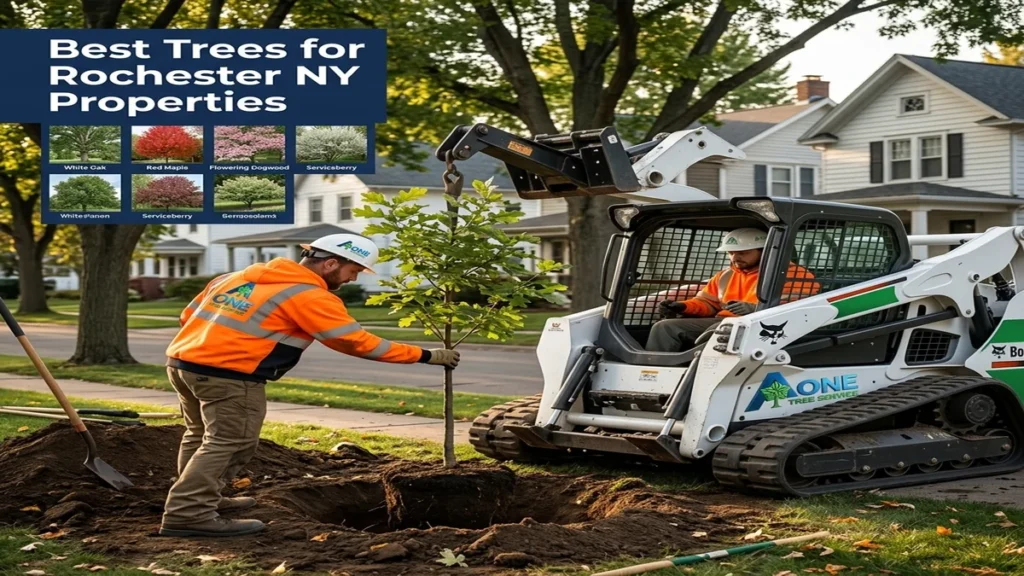
- Dig wide, not deep. The hole should be several times wider than the root ball and no deeper than it. The root flare, where the trunk widens, should sit at or just above the soil.
- Break up clay at the edges. Loosen the sides of the hole so roots can spread, rather than circling in a bowl of clay.
- Water deeply and regularly the first year. A slow soak once a week in dry spells beats a daily sprinkle.
- Mulch in a doughnut, not a volcano. Two to three inches of mulch spread wide, kept off the trunk.
- Prune lightly at first. Remove dead or broken branches and let the tree settle. Structural pruning comes in the next few years.
More general upkeep is in our tree care tips for Rochester homeowners, and the summer tree care tips post covers watering through a hot July.
When the Right Tree Is No Tree
Sometimes the best answer to a tree question is to take one down. A silver maple leaning toward the garage, a declining ash, or an overgrown pear crowding a house may be better replaced with something suited to the site. Our tree removal crew can take the old one out, including stump grinding through our stump grinding service, so the new tree has a clear spot.
Frequently Asked Questions
What are the best trees for Rochester NY clay soil?
Swamp white oak, red maple, river birch, and bald cypress tend to tolerate wet clay. Plant them wide and shallow, loosen the soil at the edges of the hole, and avoid burying the root flare.
Which trees handle road salt and tough city conditions?
Hackberry, honeylocust, and ginkgo are often chosen for streets and compacted ground. Keep any tree as far from salt spray as practical and water well during dry spells.
What trees should I avoid planting in Rochester?
Ash trees because of emerald ash borer, Callery pear because of weak branch unions, and silver maple near homes because of brittle wood and aggressive roots. Check invasive species lists before buying Norway maple.
How far from my house should I plant a tree?
It depends on the mature size and root spread of the species. Large shade trees need much more room than small ones. When in doubt, ask a tree crew to look at the spot before you dig.
When is the best time to plant trees in Rochester?
Spring and early fall are common planting windows, because temperatures are moderate and roots can establish before extreme heat or deep freeze. Water consistently in the first year either way.
Can you remove an old tree and help me choose a replacement?
Yes. We handle tree removal and stump grinding, and we can talk through species that fit your yard. Call (585) 888-9232 or use the contact page for a free estimate.
Choosing the best trees for Rochester NY gets easier once you see the actual yard. Call (585) 888-9232 or request a free estimate, and we will talk through what to keep, what to remove, and what to plant. We also offer ongoing tree trimming so young trees grow up strong.