Tree care tips for Rochester homeowners are not the same as the generic advice you find on a national gardening site. Our trees deal with heavy clay soil, lake effect snow, ice glaze, spring thunderstorms, and winter winds off Lake Ontario, and a habit that works fine in Georgia can quietly hurt a maple in Monroe County. A One Tree Services spends its days in yards around the area, so this is the short, practical version of what we would tell a neighbor leaning over the fence.
Tree Care Tips for Rochester Start With the Soil
Much of the Rochester area sits on clay. Clay holds water, packs down easily, and drains slowly, so roots get either too wet or compacted, and neither makes a tree happy. Before you worry about fertilizer or sprays, look at what is happening around the base.
Keep heavy equipment, parked vehicles, and stacked materials off the ground under the canopy. Compaction squeezes the air out of the soil that roots need. Never pile soil or fill against a trunk, because it buries the root flare, the flared area where the trunk meets the roots, and invites rot. If you are regrading, adding a patio, or digging a trench, think about where the big roots run, since most of them sit in the top foot or two of soil and reach well past the drip line.
And before any digging, call 811. Dig Safely New York marks buried utilities for free, which protects you and the roots.
Water Deeply, Not Often
Most trees are watered wrong. A quick sprinkle on the lawn wets the surface and does nothing for roots that sit a foot down. What helps is a slow, deep soak, a few times during a dry spell, that lets water move down into the root zone.
New trees need the most help. For the first couple of years after planting, a young tree has a small root system and cannot fetch water the way an established one can. A slow trickle from a hose at the base or a soaker hose, enough to wet the soil well below the surface, goes a long way. Check by pushing a screwdriver into the ground. If it slides in easily, the soil is moist. Established trees usually need water only during extended dry stretches in summer.
Because our clay holds moisture, overwatering is a real risk too. If the soil is already soggy a few inches down, skip the hose. Our post on summer tree care tips goes into the hot weather routine.
Mulch Correctly, Not Just Generously
Mulch is one of the cheapest things you can do for a tree, and the most commonly done wrong. A 2 to 4 inch layer of shredded bark or wood chips, spread in a wide ring and kept a few inches off the trunk, conserves moisture, moderates soil temperature, and keeps the lawn mower away from the bark.
The mistake we see in nearly every neighborhood is the mulch volcano, a cone piled against the trunk. It holds moisture against the bark, invites rot and rodents, and can even push roots to circle the trunk. If you can see the flared base of the trunk, you have done it right. Pull it back and flatten it if you cannot.
Fresh wood chips from tree work are great mulch, and many crews would rather leave a load than haul it. Ask when you get an estimate.
Common Mistakes That Shorten a Tree’s Life
A few habits cause a lot of the damage we get called to fix:
- Topping. Chopping the top off a tree leaves large wounds and triggers weak, fast growing shoots that break easily. It is almost never the right answer.
- Mower and trimmer damage. Nicks in the bark at the base are open wounds. A mulch ring keeps the equipment away.
- Planting too deep. A tree set too deep in clay struggles for years. The root flare should be visible at the soil line.
- Wrong tree, wrong place. A silver maple a few feet from a foundation or driveway is a future problem. See our post on the best trees for Rochester NY properties before you plant.
- Ignoring small problems. A dead branch, a crack, or a fungus conk at the base is easier and cheaper to address early.
The consumer resource Trees Are Good from the International Society of Arboriculture covers many of these mistakes with clear diagrams, and it is worth bookmarking.
Pruning: What to Do Yourself and What to Leave Alone
Pruning small branches within easy reach from the ground is a reasonable job for a homeowner with sharp hand pruners or a pole pruner. Make cuts just outside the branch collar, remove only dead, broken, or crossing branches, and stop when you are unsure.
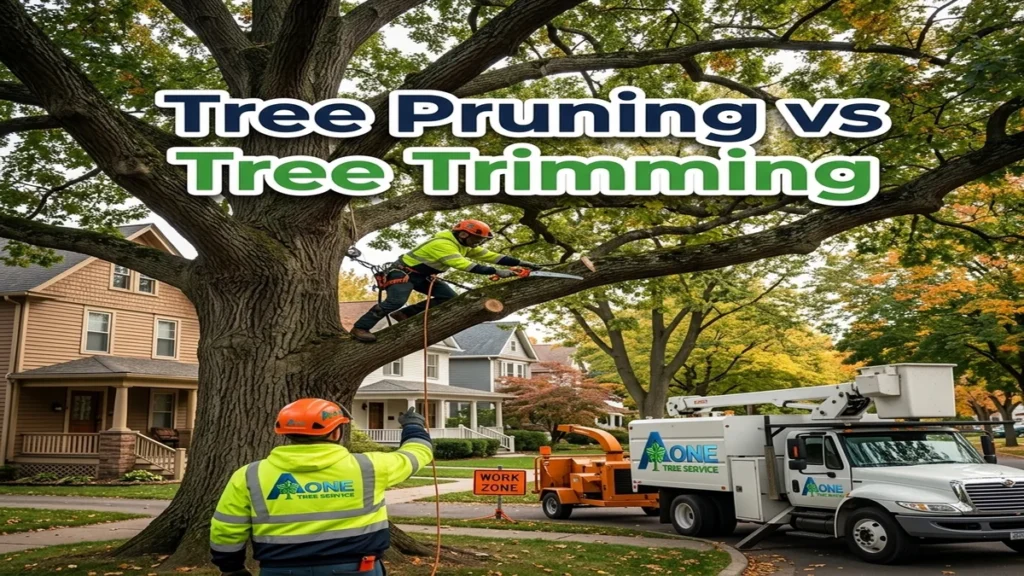
Anything that needs a ladder, a chainsaw overhead, or a rope is where homeowners get hurt. The same goes for limbs near wires. Work above your head with a running saw is the cause of many avoidable injuries. Our post on DIY vs professional tree trimming lays out where the line is, and our tree trimming crews handle the rest using climbing gear, rigging, and a spider lift where a truck cannot fit.
Timing matters too. Late fall through early spring, while trees are dormant, is a common time for pruning most species. For specifics on species and seasons, see the best time to trim trees in Rochester NY.
Know When to Call a Professional
Not every tree issue needs a crew, but some should not wait. Call someone for a look if you see any of the following:
- A large dead branch hanging over the house, a driveway, or a play area.
- A new lean, or soil heaving up on one side of the trunk.
- Mushrooms at the base, a hollow trunk, or deep vertical cracks.
- Limbs touching or close to power lines.
- A tree that leafed out thinly this year or has lost large sections of its canopy.
Our signs a tree needs removal post describes when trimming is no longer enough, and our tree removal service handles trees that cannot be saved. Check how your own town handles removal too, because rules vary and you should confirm with your town code enforcement or building department before taking out a large tree.
A Simple Seasonal Rhythm to Follow
You do not need a spreadsheet. The best tree care tips for Rochester yards boil down to a short seasonal routine that covers most of what a tree needs.
Spring. Walk the yard after the snow melts and look for broken limbs and winter damage. Refresh mulch, and leave heavy pruning of oaks until later, since open cuts in spring can attract beetles.
Summer. Water young trees deeply during dry spells and watch for early signs of insects or leaf problems.
Fall. This is the time for structural pruning and dead wood removal, plus a last deep watering before the ground freezes. Our guide to how to prepare trees for winter walks through it.
Winter. Mostly hands off. Knock heavy wet snow gently off young evergreen branches from below if it is safe, and avoid shaking icy limbs, because they snap. If a tree is damaged, call us. The National Weather Service Buffalo office issues the storm alerts that cover Rochester, which helps you time a check after a major event.
Neighborhoods with older, larger trees, like Pittsford and Brighton, benefit most from a yearly walk through. See our pages for tree service in Pittsford NY and Brighton for local notes.
Frequently Asked Questions
What is the most important tree care habit for Rochester homeowners?
Mulching correctly and watering deeply during dry spells cover most of what trees need. Add a yearly walk through the yard to spot dead limbs and other warning signs early.
How often should I water my trees?
New trees need regular deep watering for the first couple of years. Established trees usually only need a deep soak during long dry stretches. Our clay soil holds water, so check the soil before watering.
Is it okay to prune my own trees?
Small branches you can reach from the ground are fine. Work that needs a ladder, a chainsaw overhead, or is near power lines should be left to a professional crew.
Should I fertilize my trees?
Not routinely. Most established trees in a typical yard get what they need from the soil and organic mulch. If you suspect a nutrient problem, have the tree evaluated first rather than guessing.
What trees do well in Rochester?
Native and well adapted species such as oaks and sugar maples tend to do well, while fast growers like silver maple and short lived trees like some poplars cause more storm trouble. Match the species to the space.
How do I know when a tree needs a professional?
Call for help if you see dead limbs over structures, a new lean, fungus at the base, cracks, hollows, or branches near wires. A free on site estimate from us will tell you whether it needs care or removal.
Good tree care tips for Rochester come down to a few simple habits done on time. If you want a second set of eyes on your trees, request a free estimate or call (585) 888-9232 any hour. We are open 24 hours, 7 days, and fully insured.