
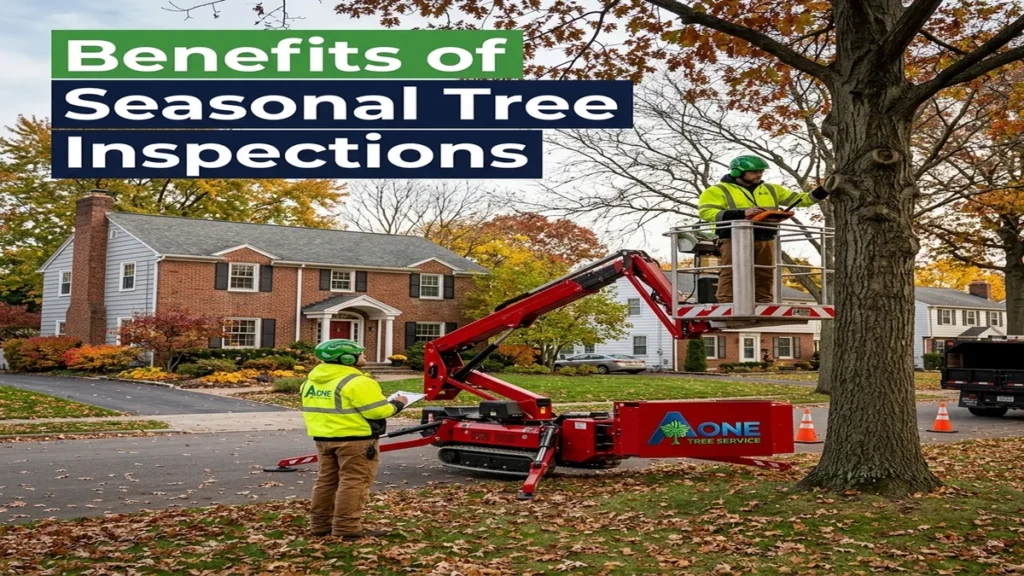
Seasonal tree inspections are the cheapest insurance a Rochester NY homeowner can buy against a bad surprise, because nearly every tree emergency we get called to started as something small and visible months earlier. A crack at a branch union, a dead limb over the driveway, mushrooms at the base of a trunk: all of it was there, and nobody looked.
A One Tree Services works across Monroe County in every season, and the pattern repeats. The tree that comes down in a July thunderstorm usually showed warning signs the previous fall. This post explains what changes from season to season, what to look at in each one, and how to set up a routine that fits a normal yard and a normal budget.
Why Seasonal Tree Inspections Beat a One Time Look
A tree is a living structure that changes all year, and each season hides some problems while exposing others. Leaves cover structural defects all summer and then drop to show them. Frozen ground hides root trouble that spring thaws bring out. A single look in one season only ever tells you part of the story.
Repeated checks matter even more than a thorough one. When you look at the same tree twice a year, you notice change: a lean that wasn’t there, a crack that got longer, a branch that leafed out thinly. That comparison over time is what separates a tree that is stable from one that is slowly failing, and it’s the kind of thing a single walk through can’t give you.
Spring: Look for What Winter Did
Lake effect snow and ice storms are hard on Rochester trees, and the damage often hides in plain sight until the snow melts. Early spring, before the leaves open, is the time to walk each tree and look up.
You’re looking for snapped or hanging branches, split crotches where two stems meet, and bark torn from the trunk. As buds open, watch for limbs that stay bare or leaf out thin while the rest of the tree fills in. That usually means that branch didn’t make it through winter. Pay extra attention to trees that took a heavy ice load, since cracks can open slowly and show up weeks later.
Spring is also a good moment to spot early insect and disease trouble, like spotted leaves or oozing bark, while the canopy is still light enough to see through.
Summer: Read the Canopy
A full canopy tells you a lot about root and vascular health. Look for leaves that wilt in mild weather, scorched or discolored foliage, thinning on one side, or early fall color in July. Any of those can point to stress, drought, pests, or a problem in the roots.
Summer is also when Rochester’s strong thunderstorms and lake winds test trees, and when dead branches become easiest to find. Dead wood has no leaves, so it stands out against green. Check for it above decks, driveways, play areas, and the roof. In the heat, keep an eye on recently planted trees and on any tree that sits in a lawn you irrigate heavily, since overwatering can cause its own root trouble.
Fall: The Best Look at Structure
Once the leaves are down, the whole framework of the tree is visible. This is the most useful season for spotting structural defects: cracks, cavities, included bark where two stems pinch together, and branches that cross and rub. It’s also the last practical window before winter loading, so anything you find can still be dealt with before snow arrives.
Fall is when we suggest looking hardest at big trees close to the house. Silver maples, willows, and older poplars are brittle and tend to shed limbs under ice. Ash trees deserve a careful look too, because emerald ash borer is a real regional threat and thinning canopies and woodpecker damage are warning signs. The emerald ash borer information network has good identification photos if you aren’t sure what you’re seeing.
Winter: Dormant Season Checks and Pruning Windows
A bare tree in January is easy to read. You can see the whole branching pattern, spot crossing limbs, and judge how much weight is hanging on weak attachments. After a storm, a winter check also shows which trees came through intact.
Dormancy is a good time for pruning on many species because the tree is under less stress and the structure is exposed. If you want to know when to cut which tree, our guide to the best time to trim trees in Rochester NY covers timing by season. Winter is also the time to flag anything that needs attention before spring growth starts.
What a Good Inspection Actually Covers
Whether you do a first pass yourself or have a crew look, the same areas matter. Start at the ground and work up.
- Root flare and base: mushrooms or conks, soil heaving on one side, girdling roots, or bark that sits unusually loose.
- Trunk: long vertical cracks, cavities, sunken or oozing patches, and an unusual lean.
- Branch unions: tight V shaped forks with bark pinched between them, which tend to split under load.
- Canopy: dead wood, thin areas, dieback at the branch tips, and crowded or crossing limbs.
- Targets: what’s underneath. A weak limb over a lawn is a nuisance, while the same limb over a bedroom roof is a risk.
That last point is the one people skip. A defect matters more or less depending on what it could hit. A decayed tree at the back of a lot may be fine to monitor, and the same tree beside the garage may need action now. Our post on how to identify hazardous trees explains how to weigh defect against target.
Keep a Simple Record
Take a few dated photos of each major tree from the same spot every season: the full tree, the base, and any concern. A phone album is plenty. When something changes, you can see it, and if a tree ever does cause damage, a record of regular checks is useful to have when you talk with your insurance company.
Building a Routine That Fits Your Yard
Most properties don’t need seasonal tree inspections by a pro in all four seasons. A good baseline is a quick homeowner walkthrough each season and a closer look by an experienced crew once a year, ideally in fall after the leaves drop or in early spring after the snow. Trees with known defects, very large trees near the house, or anything leaning deserve more frequent attention.
When you want a second pair of eyes, every job with us starts with a free estimate, and that visit is a good time to point out the trees you’re worried about. We’ll tell you what we see in plain terms and what can wait. If the answer is cleanup, tree trimming usually resolves it. If a tree is past saving, we’ll talk through tree removal and what it involves, and our tree removal cost guide explains how pricing works.
For homeowners in older neighborhoods with big mature trees, such as Brighton, the routine pays off more than anywhere. Large old trees sit close to houses there, so the cost of a miss is higher.
It also helps to know who to trust for general guidance. The International Society of Arboriculture publishes standards and resources that reputable tree care professionals work from, and it’s a good reference if you want to learn what a careful inspection looks like.
Frequently Asked Questions
How often should trees be looked at each year?
Most healthy residential trees do well with a quick homeowner check each season and a closer look by an experienced crew once a year. Older trees, trees with known defects, and trees near the house or driveway are worth checking more often.
Which season is best for a tree inspection?
Fall and early spring are the most useful. With the leaves down you can see the full structure, and early spring shows what winter ice and snow did before new growth hides it. Summer helps for judging canopy health.
Can I do my own inspection between visits?
Yes. A slow walk around each tree looking for dead branches, new cracks, mushrooms at the base, or a change in lean is worthwhile. It won’t replace an experienced eye, but it catches fast changes between scheduled looks.
What warning signs mean I should call right away?
A sudden lean, a fresh crack in the trunk, heaving soil at the base, or a large hanging limb all deserve a quick call. Keep people and cars away from the area until someone has looked at it, especially after a storm.
Does an inspection mean the tree will come down?
No. Most findings are minor and handled by pruning, deadwood removal, or simple monitoring. Removal is only recommended when a tree is dead, badly decayed, or structurally unsound in a way that can’t be fixed.
If you’d like someone to walk your property and tell you what’s worth worrying about, call (585) 888-9232 or book a free estimate. Regular seasonal tree inspections catch small problems while they’re still cheap to fix, and we’re happy to look.