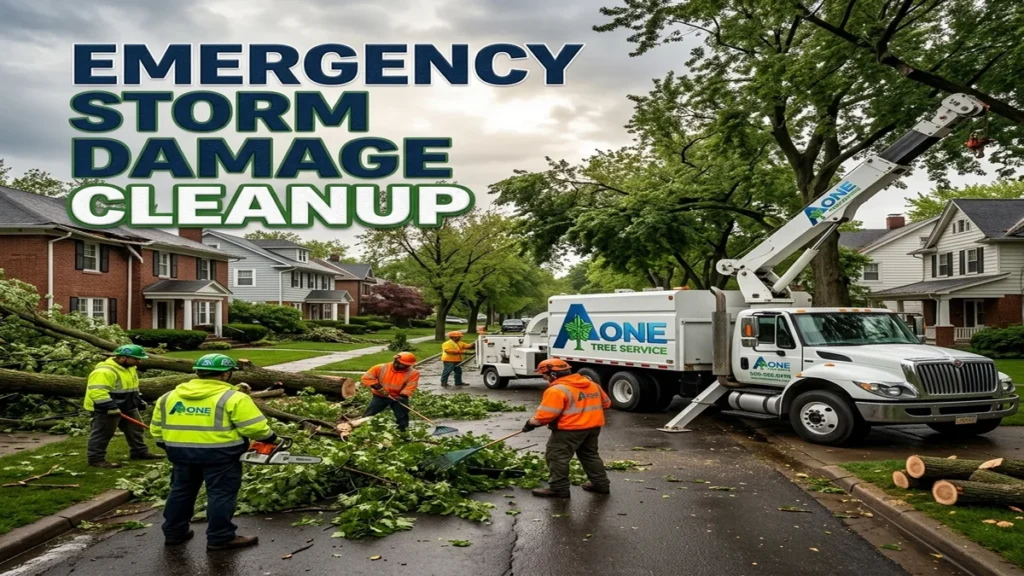
The best storm damage cleanup tips come down to one idea: slow down, look up, and sort the mess by danger before you touch a single branch. The storm has passed, the wind has dropped, and your yard looks like a green and brown jigsaw puzzle. Most people want to grab a rake or a chainsaw and start. That urge, understandable as it is, sends people to the emergency room every year in snowy, windy places like Monroe County. What follows is a practical way to work through it, including what a homeowner can reasonably handle, and where a crew with rigging and climbing gear has to take over.
Start With a Slow Look, Not a Cleanup
Walk the property before you pick anything up, and keep your eyes up. The danger in a damaged tree is often above you, not at your feet. Look for broken limbs caught in the canopy, trunks leaning at a new angle, soil lifted at the base and cracks where a branch meets the trunk. Trees can keep failing for hours or days after a storm, so do not park, stand or play beneath anything that looks unstable. For general weather safety during winter storms, the National Weather Service shares guidance at weather.gov/safety/winter.
Storm Damage Cleanup Tips for Gear and Setup
If you are going to handle any cleanup, dress for it. Sturdy boots with good tread, work gloves, safety glasses and a hard hat are the baseline, and hearing protection if you are using any power tool. Long sleeves help against scratches. Choose a calm, dry window if you can, because wet bark is slippery and gusty air can swing a half cut branch where you do not expect it. Work with another person nearby and keep your phone on you. Tell someone inside where you are working.
Plan the order of work before you start. Clear a path first so you are not stumbling over debris with a saw in your hands. Decide where the cut branches will go: curbside, a brush pile in the yard, or a trailer. Move vehicles, toys and furniture away from the area. Rochester soil is heavy clay, and after a storm it is often soft and slippery, so footing is worse than it looks.
What Most Homeowners Can Handle
Plenty of storm cleanup is low risk when you do it with care. These are generally reasonable DIY jobs:
- Picking up twigs, leaves and small branches that are fully on the ground and not touching a wire, a structure or another limb.
- Cutting small, loose branches with a hand saw or pruning loppers while standing on the ground.
- Clearing gutters, drains and window wells so water can move away from the house.
- Raking and bagging leaf litter and light debris from lawns, beds and the driveway.
- Checking fences, patio furniture and grills for damage once the area is confirmed safe.
Stay within your comfort and equipment limits. A rule many people use is branches under a few inches thick, on the ground, with nothing hanging over you. When a job starts to need a ladder, a chainsaw above chest height or a rope, it has crossed from cleanup into tree work.
What to Leave to a Professional Crew
Some storm situations are not worth the risk, no matter how handy you are. Call a tree service when you see any of these:
- Anything touching or near a wire. That is never a DIY situation.
- A tree resting on a house, garage, shed or car. The weight is often held by the structure itself, and cutting the wrong piece can drop it further.
- Hung up limbs. A branch caught in the canopy overhead can fall the second you disturb it.
- Trunks under tension. Bent or pinned wood stores energy and can snap or spring when cut.
- Large limbs or whole trees. They need rigging to lower pieces safely.
- Anything that needs a ladder or a roof. Ladders and saws are a bad pairing.
Our crews work with climbing and rigging gear, spider lifts, bobcat loaders and high capacity chippers precisely for these situations. A spider lift can sit in a narrow side yard, hold a worker in the right spot to cut, and avoid putting heavy weight on a damaged tree or a soft lawn. If you are weighing the risks, read DIY tree trimming vs hiring a professional, and see our storm damage tree removal service for how we handle the bigger jobs.
Understanding Tension and Why Cuts Go Wrong
This is the part people underestimate. A branch bent under another branch, or a trunk bowed over a fence, is like a loaded spring. Make the wrong cut and the wood can kick back toward you with more force than you can react to. Professionals read tension by looking at where the wood is compressed and where it is stretched, and they make relief cuts in a specific order. If you cannot tell which side of a log is under strain, you should not be cutting it. A chainsaw also adds its own dangers: kickback, a pinched bar, and fatigue by the second hour. Never use one overhead or while standing on something unsteady.
Cleanup Mistakes We See Again and Again
A few errors show up after nearly every storm. People start cutting before they have looked at the whole tree, and then discover the limb they just freed was the only thing holding up another. They drag a heavy trunk across a lawn that is still saturated and leave ruts that last all summer. They stack brush against the house or a fence, where it becomes a shelter for pests. They hire the first truck that pulls up without asking for proof of insurance or a written scope. And they try to save a tree that really should come down because it feels wasteful to remove it, then end up paying twice.
The fix for nearly all of these is patience. Give yourself a day to look before you cut. Take photographs, make a list, and ask questions. Good tree companies are happy to explain what they see and why, and a free estimate is the best way to learn whether the damage is cosmetic or serious. If the tree in question is one you were already worried about, the guide to tree removal vs tree trimming can help you decide what to do next.
Handling the Debris Afterward
Once the dangerous work is done, you still have a lot of wood. Small brush can be chipped or bundled for pickup; rules for curbside yard waste differ by town, so check your town or Monroe County’s website at monroecounty.gov for what is accepted. Logs can be split for firewood, but keep in mind that moving firewood long distances can spread tree pests. The New York State Department of Environmental Conservation shares guidance at dec.ny.gov. If a tree was ash, take extra care with how and where wood moves.
Chips make good mulch for beds and paths. If you hire a crew, ask whether the chips and wood stay or go, and get that in writing before work begins.
Document, Then Follow Up
Before anything is moved, take photographs from several angles, then take more as work proceeds. If you will file a claim, your insurer will want to see the damage and the cleanup. Keep receipts for tarps, rentals and hired help. Our post on what to do after storm damage in Rochester NY walks through the first hours in more detail, and what to do after a tree falls on your property covers the larger cases. For colder months, see our winter storm tree cleanup page.
The weeks after a storm are also the time to check the trees that survived. A limb that cracked but did not fall can come down on the next gust. Look closely at wounds, splits and any new lean, and consider a professional evaluation rather than assuming the worst has passed. The Ready.gov winter weather page is a useful reminder to prepare before the next event.
Frequently Asked Questions
What are the most important storm damage cleanup tips for homeowners?
Stay away from power lines, look up before you work, wear protective gear, document damage and leave anything large, tangled or tensioned to a professional crew.
Is it safe to cut up a fallen tree myself?
Small branches on the ground, sometimes. Large trunks, hung up limbs and anything on a structure are risky. Tension in the wood can cause a sudden, dangerous movement when you cut.
How soon should I call a tree service after a storm?
Right away if a tree is on a house, blocking a driveway or hanging over something valuable. For smaller problems, you can schedule a visit, but do not wait if a tree looks unstable.
Should I take photos before cleaning up?
Yes. Photograph the damage from several angles before moving anything and keep taking photos as the work progresses. Your insurer will likely ask for them.
What do I do with all the branches and logs?
Small brush may be accepted for curbside pickup, depending on your town. Logs can be split for firewood or hauled away by a crew. Ask your town about its yard waste rules.
Does A One Tree Services handle storm cleanup?
Yes. We handle storm damage tree removal and cleanup across Rochester and nearby towns, with free on site estimates and a 24/7 emergency line.
If your yard needs more than a rake, use these storm damage cleanup tips as a starting point and let us handle the heavy part. Request a free estimate or call (585) 888-9232, and see our emergency tree removal page for urgent situations.