
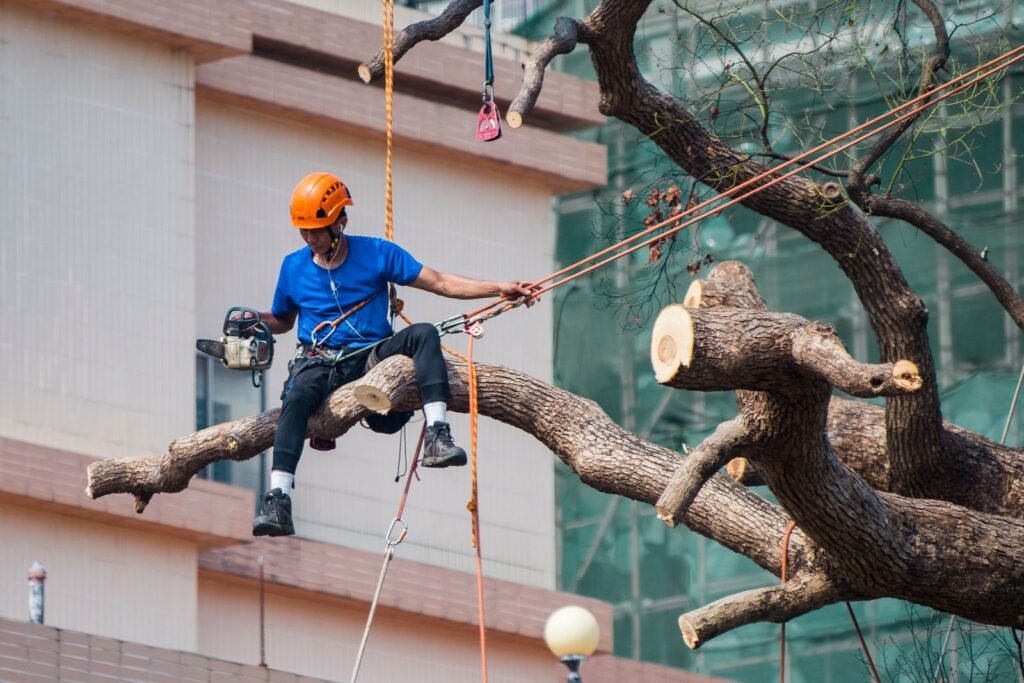
When you call for emergency tree service, you are usually doing something you have never done before, at the worst possible time. A limb is on the roof, or a trunk is across the driveway, or a tree is leaning in a way that makes your stomach drop. Not knowing what happens after you dial can feel almost as stressful as the tree. A One Tree Services runs a 24/7 emergency response across Rochester and Monroe County, and this is a plain walkthrough of what to expect, what to say, and what to do while you wait.
Step One: Get Safe Before You Dial
Before the phone call, move yourself and everyone else away from the tree. Get people out from under anything that is leaning, cracked, or hanging. Keep pets inside. If the tree is on a house and you are worried about the structure, go outside and wait where you can see the building. Phone calls can wait thirty seconds. Safety cannot.
Anything touching or near a power line is a bigger problem. Assume the wire is live, stay far back, and tell whoever you call. Do not touch the tree, a fence it is lying on, or a puddle beneath it.
What Happens in the First Minutes of the Call
A good emergency call starts with quick triage, not scheduling. The person on the phone wants to understand the situation fast: is the tree on a structure, is it blocking a driveway or road, is it touching a wire, and is anyone hurt. Those answers decide how urgent the job is compared with everything else going on.
A tree leaning on a power line, or sitting on a home with people inside, is handled differently than a stable tree blocking a detached garage. Both are real problems, but the order of response follows risk, not just who phoned first. Emergency services of every kind work that way.
What to Have Ready When You Call for Emergency Tree Service
Expect direct questions. You do not need to be calm or precise, and nobody expects exact measurements. “A big oak fell across the driveway” or “a large limb is resting on the roofline” is enough to start. It speeds things up if you can answer a few basics.
- Your address and the best number to reach you at
- What is down: a whole tree, a large limb, or several pieces
- Whether it touches or sits near power lines or utility equipment
- Whether it is resting on a house, garage, car, or fence
- Whether anyone is hurt or cannot leave the area safely
Photos help if you can take them from a safe distance, and a quick text with a picture can show a crew more than a minute of description. Mention gates, narrow side yards, or a steep slope too, because access decides what equipment gets sent.
Response Times: What Is Realistic
Everyone wants to know how fast someone can get there. The honest answer is that it depends on what is happening in the region. After a big wind event or a heavy lake effect ice storm, calls pile up across Monroe County at the same moment, and every tree company is busy. Roads can be blocked by the same trees, and crews have to work safely, not just quickly.
A tree threatening a structure, or blocking the only way in or out of a home, gets priority over a stable tree lying in an open yard, even if the second call came first. During widespread storms, expect some wait even for genuine emergencies. Be wary of anyone who promises a precise arrival time before they know what they are dealing with. A realistic window beats an empty promise.
The Safety Assessment Comes Before the Saw
When the crew arrives, the first job is looking, not cutting. A fallen tree can still be under tension. It may be balanced on a fence or a roof ridge, and the root ball may not have fully let go of the ground. A partly fallen tree can shift the moment someone makes the wrong cut or takes a step nearby.
The crew checks for what you cannot see from the lawn: distance to wires, tension in the wood, what the tree is resting against, and whether it is safe to bring machinery in at all. Only then does cutting start. If a tree is already down on your property, our guide to what to do after a tree falls on your property covers the steps you can safely take in the meantime.
Stay Clear Until It Has Been Assessed
Even a tree that looks settled can move when weight shifts or a limb is cut. Keep people, pets, and vehicles away from the tree and from anything it is leaning on until trained crew members have looked it over.
How the Work Unfolds Once It Starts
With the assessment done, the crew plans the sequence: what comes off first, how the tree will be sectioned so each piece lands where it should, and what equipment is needed to move it. Emergency work often happens in stages. First, make the immediate hazard safe. Then handle full removal and cleanup. In the first hour the goal is reducing risk, not finishing every last piece.
If the tree came down on a building, extra care goes into taking pieces off without causing more damage. Spider lifts, which are tracked machines that fit into tight backyards, help with a tree draped over a rear roof or fence where a truck cannot reach. Rigging lines lower heavy sections under control, and high capacity chippers deal with the brush. Depending on the scope, emergency tree removal may extend to the rest of the damaged tree or other storm debris nearby.
How an Emergency Job Differs From a Scheduled One
A routine removal or trim is planned around your calendar. There is a walk through, an estimate you can compare, and a date. An emergency skips most of that. The response is built around making a hazard safe as quickly as conditions and crew availability allow.
Scope can look different, too, because emergency jobs hide unknowns. Maybe the trunk has pinned a fence, maybe there is damage under the tree that nobody can see yet, or maybe the debris is tangled with a service line. The fundamentals of good tree work do not change because the situation is urgent. For broader cleanup that goes beyond one tree, see our post on what to do after storm damage in Rochester NY, and for severe weather updates the National Weather Service Buffalo office covers the Rochester area.
What to Do While You Wait
Once you have called, keep everyone back from the affected area, and do not drag branches or try to cut anything yourself. If power lines are in play, treat the whole zone as energized and stay well clear no matter how still it looks. Contacting your utility about a line is separate from calling a tree crew, and you should do both when a wire is involved. A note about which way the tree seems to be shifting can help the crew, but never at the cost of getting closer to something unstable.
Take photos from a safe distance if you can, since insurance paperwork goes easier with them. For general storm safety guidance, the federal Ready.gov winter weather page is a useful reference to keep bookmarked. We serve homeowners from Irondequoit to Brighton, and in places like Greece and Webster near the lakeshore, a wind driven storm can bring a tree down in minutes. Our storm damage tree removal crews handle the cleanup once the hazard is made safe.
Frequently Asked Questions
What counts as a tree emergency versus something that can wait?
A tree that is down or leaning onto a structure, vehicle, power line, or road, or one that blocks the only way into your home, generally counts as an emergency. A stable tree with storm damage that is not threatening anything can usually be scheduled during regular hours.
Should I call the power company or a tree service first if a tree hit a power line?
Treat anything touching or near a power line as an electrical hazard first. It is reasonable to contact the utility about the line while you also call for emergency tree service, since crews need the line confirmed safe before they work near it.
Will my homeowners insurance affect how the emergency call is handled?
The first goal is making the situation safe, no matter what your policy says. Photos of the damage before cleanup are worth gathering when it is safe to do so, but they should never delay dealing with a genuinely hazardous tree.
Can emergency crews come out at night or during a storm?
Our emergency line is open around the clock, but active severe weather can affect how quickly a crew can safely work once on site. Real hazards, like a tree resting on a home with people inside, are treated as high priority at any hour.
Do I need to be home when the crew arrives?
It helps, since you may know about buried lines, gates, or how the tree fell. If you truly cannot be there, give clear access information and a phone number so the crew can proceed safely.
Knowing what to expect when you call for emergency tree service takes some of the panic out of a bad moment. Keep (585) 888-9232 handy, and when the hazard has passed, ask for a free estimate on any remaining cleanup.