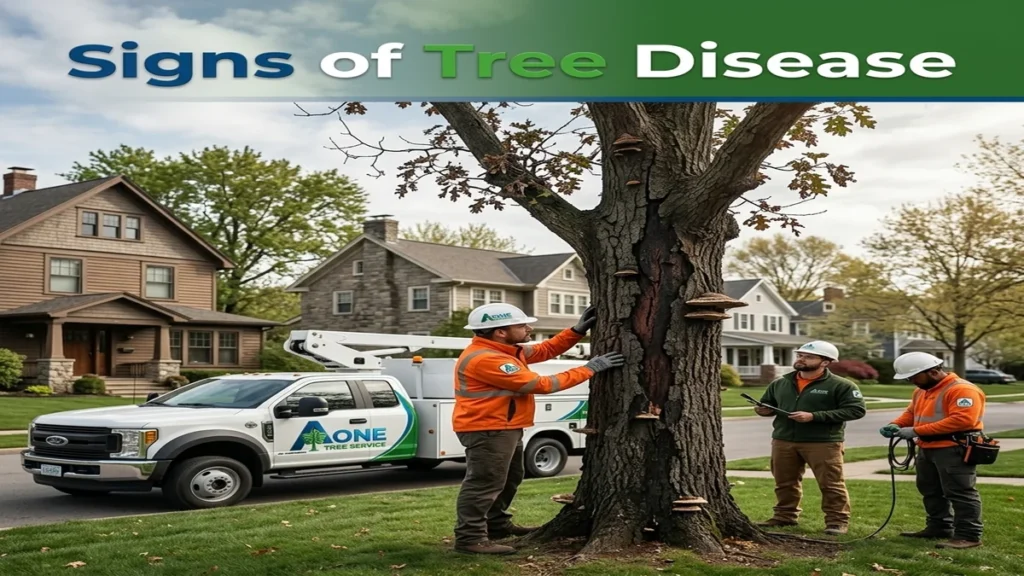
Common tree diseases show up in Rochester yards in a pattern: the leaves look off in June, a branch dies back by August, and by the next spring the whole tree is asking for a decision. Most homeowners spot the first sign and assume it is a dry spell or a bad year. Sometimes it is. Sometimes it is a pest or a fungus that will not stop on its own. A One Tree Services sees declining trees across Monroe County every season, and this post covers the problems worth knowing, what each one looks like, and when it is time to get help.
Common Tree Diseases and Pests in the Rochester Area
Strictly speaking, some of the biggest threats are insects and not diseases. We include them here because on the ground, the symptoms look similar: thinning crowns, dying limbs, leaf spots, and bark damage. The honest summary is that a handful of problems cause most of the calls we get, and the first step is learning to tell a cosmetic issue from a serious one.
Because symptoms overlap, do not trust one clue. A tree can have thin leaves from drought, root damage, a disease, or all three. That is one reason we look at the whole tree: crown, trunk, base, and soil. For local diagnosis and lab help, Cornell Cooperative Extension of Monroe County is a solid resource, and the NYS DEC forests and trees pages track invasive pests across the state.
Emerald Ash Borer: The One Most Rochester Yards Have Already Met
Emerald ash borer is a metallic green beetle whose larvae feed under the bark of ash trees and cut off the flow of water and nutrients. It is a real regional threat, and many ash trees in our area are already declining or dead. Once a tree is heavily infested, there is usually little chance of saving it.
Signs to look for:
- Thinning at the top of the crown, with branches dying back from the tips down.
- Small D shaped exit holes in the bark, roughly the width of a pencil lead.
- Bark splits showing winding tunnels underneath.
- More woodpecker activity than usual, with patches of bark flaked away.
- Clusters of shoots sprouting from the lower trunk.
The emerald ash borer information network has identification photos and treatment background. Dead ash wood gets brittle quickly, so removal is often time sensitive, which we discuss in why dead trees are dangerous.
Dutch Elm Disease and Oak Wilt: Vascular Diseases That Move Fast
Some of the most serious common tree diseases attack the vascular system, the plumbing that carries water up the trunk. Dutch elm disease, spread by bark beetles, causes leaves on one branch to wilt and yellow in summer while the rest of the tree looks fine, and it can spread through the crown within a season. Oak wilt is a fungal disease that can pass between nearby oaks through connected roots and by beetles drawn to fresh pruning wounds. Leaves on affected oaks wilt, brown from the edges inward, and may drop early.
Both are good reasons to be careful about when you prune. With oaks, many tree care sources advise avoiding pruning during the warm growing season, and to seal off damage promptly if a limb is wounded. If you see a branch wilting in midsummer, do not wait to see if it recovers.
Apple Scab and Other Leaf Diseases
Apple scab is the classic cosmetic disease on crabapples and apple trees, and it appears every wet spring. Olive green to black spots form on leaves, which can yellow and drop by midsummer. It rarely kills a tree, but repeated defoliation weakens it. Raking up and disposing of fallen leaves in autumn reduces the fungus that carries over to next year.
Anthracnose and powdery mildew work similarly. Anthracnose causes blotchy brown patches on sycamore, maple, and ash leaves in cool, wet weather. Powdery mildew leaves a white dust on leaf surfaces in late summer. Both look alarming and are usually survivable for a healthy tree. A tree that is already stressed from drought, root damage, or compacted soil has a harder time.
Verticillium Wilt and Other Soil Borne Problems
Verticillium wilt is a soil fungus that enters through roots and blocks water movement. Maples are especially susceptible, and the sign is a sudden wilt or dieback of one side of the tree or a few branches, often with streaking in the wood. It can linger and show up again each year.
Root and crown rots follow wet clay soil, and heavy clay is common in Rochester. When water sits around the base of a tree, roots suffocate and decay organisms take over. Fungi growing at the base of the trunk, such as mushrooms or shelf like conks, often point to this kind of rot. That is a structural worry, not just a plant health one. See our post on how to identify hazardous trees.
Needle Diseases on Spruce and Pine
Evergreens have their own list. Needle cast diseases cause the inner needles of spruce to turn purple brown and drop, leaving bare lower branches that creep upward. Humid summers and crowded planting make it worse. White pines can show browning needles from several causes, including road salt and winter drying, which makes diagnosis tricky. If your spruce is going bare from the bottom, it is worth getting identified before you assume it is just shedding.
Warning Signs That Apply to Almost Any Tree
You do not need to identify the exact disease to know when to call. These signs matter on any species:
- A canopy that is thin compared with neighbors of the same kind, year after year.
- Dieback, where branch tips die and the dead zone creeps toward the trunk.
- Cankers, which are sunken or oozing patches on bark.
- Fungus on the trunk or base, or bark that is peeling away.
- Leaves that change color or drop early, out of season.
- Small holes, sawdust, or tunnels in the bark.
Our seasonal tree inspections post explains why a yearly look catches these early.
What Homeowners Can Actually Do About Common Tree Diseases
Prevention beats rescue. Healthy trees fight problems better, so the basics matter: mulch properly, water deeply during droughts, avoid soil compaction, and do not wound trunks with a mower. Our tree care tips for Rochester homeowners cover the routine.
Sanitation helps for leaf diseases. Rake and dispose of infected leaves, and clean pruning tools between cuts if you are working on a diseased tree. Do not move firewood from far away, since it can carry beetles and fungus into your yard.
Know when to stop. Spraying a tree that is already failing wastes money, and no treatment brings back dead wood. When a tree is mostly dead or structurally weakened, the safest choice is removal. Our tree removal and tree trimming teams can remove dead limbs or take the whole tree down, using spider lifts in tight yards and chippers to clear the debris. If you are wondering which route fits, read tree removal vs tree trimming. We serve towns across the county, including Penfield.
One more note: we are not plant pathologists, and we will not pretend to diagnose a lab level problem from the driveway. What we can tell you is whether the tree is a safety risk and what to do about it.
Frequently Asked Questions
What are the most common tree diseases in Rochester NY?
Problems we see often include emerald ash borer, apple scab on crabapples, anthracnose on shade trees, verticillium wilt on maples, and needle diseases on spruce. Vascular diseases like Dutch elm disease and oak wilt are also worth knowing about.
How can I tell if my tree is diseased or just dry?
Drought stress tends to affect the whole tree and improves once it rains. Diseases often hit one branch or one side first, leave spots or wilting, and keep getting worse. If you are unsure, have the tree looked at.
Can a diseased tree be saved?
Sometimes. Leaf diseases like apple scab rarely kill a healthy tree. Vascular diseases and heavy borer infestations are much harder to stop, and a mostly dead tree cannot recover.
Is a diseased tree dangerous?
It can be. Rot at the base or inside the trunk, or a large amount of dead wood, makes a tree more likely to drop limbs or fall. Trees near your house, driveway, or wires should be checked first.
Should I prune an infected tree?
Removing dead and diseased limbs helps in many cases, but timing and technique matter. Pruning oaks in the wrong season can spread oak wilt, so ask a professional before cutting.
Who do I call if I see signs of disease?
Call us for a free on site look at the tree’s safety and structure. For plant diagnosis and lab testing, Cornell Cooperative Extension of Monroe County is a good resource.
Most common tree diseases are easier to deal with when you catch them early. If something looks wrong on one of your trees, request a free estimate or call (585) 888-9232 any hour. We are open 24 hours, 7 days, and fully insured.