
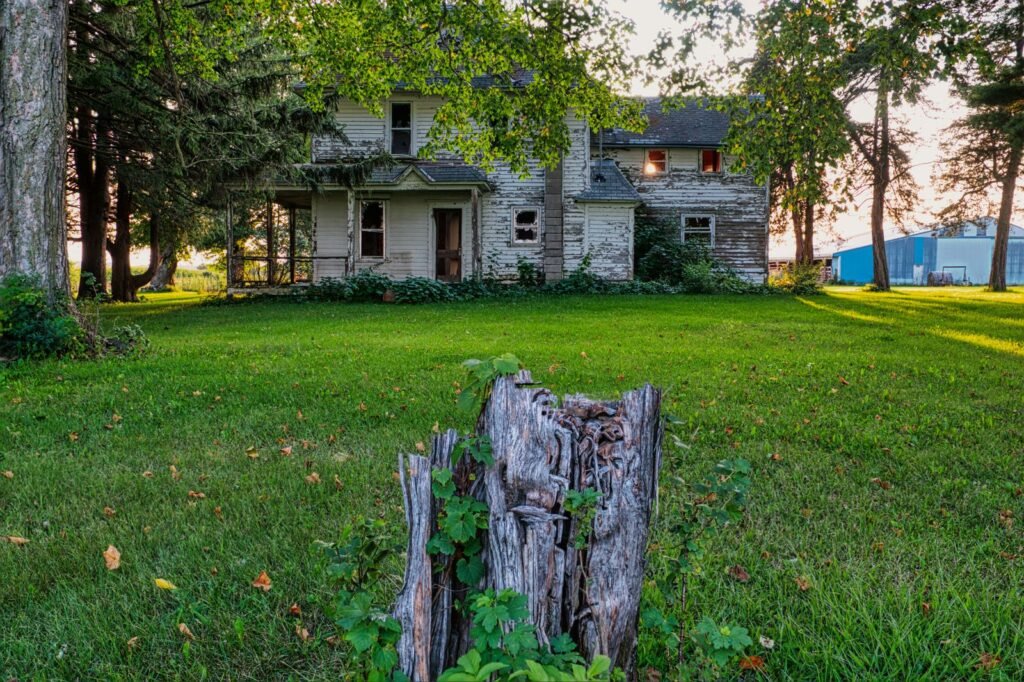
Stump grinding vs stump removal is a choice most homeowners make with a fresh stump staring at them and no idea the two phrases mean different things. The tree is gone, the stump is not, and a crew has just asked whether you want it “ground” or “pulled.” Different machines, different mess, different price, and different results. Picking the wrong one can mean paying for a job you did not need, and A One Tree Services sees that mix up more often than you would think.
Here is how the two work, what each leaves behind, and how to match the job to your yard.
Stump Grinding: Chewing the Wood Down Below Grade
A stump grinder is a machine with a spinning, toothed cutting wheel. The operator sweeps it back and forth across the stump, shaving it into chips from the top down until the wood sits several inches below the surrounding soil. The stump disappears. The roots do not. They stay where they are, buried, and slowly rot over the following years.
This is the quicker, gentler option. Many stumps are finished in well under an hour, depending on diameter and how dense the wood is. You are left with a shallow bowl of wood chips that you can rake out, top off with soil, and reseed. There is no crater and no ripped up lawn, and nearby plantings usually stay where they are. For most residential jobs, grinding is the answer. If you want to see how that visit goes from arrival to cleanup, our stump grinding service page lays it out.
Stump Removal: Taking the Stump and Its Roots Out
Full stump removal is a different job entirely. Rather than shredding the wood in place, the crew extracts the stump and as much of the main root structure as needed, using an excavating machine, a bobcat loader, hand digging, or a mix. What you have afterward is not a shallow dish. It is a real hole, often a few feet across, that must be backfilled with soil and compacted.
That makes removal slower and messier. Roots do not grow in tidy circles. They run wherever the soil lets them, under turf, around a sprinkler line, beneath a flagstone path, and pulling them out means digging along those routes. In heavy Rochester clay, an extracted root ball can weigh a surprising amount and drag a lot of soil with it.
The Plain English Version
Grinding gets rid of the stump you can see. Removal gets rid of the stump and the root mass attached to it. If nothing will be built or planted on that exact spot, grinding almost always does the job for less money and less damage to your yard.
Stump Grinding vs Stump Removal Side by Side
| Question | Grinding | Removal |
|---|---|---|
| What leaves the ground | Stump wood and shallow surface roots | Stump plus the main root mass |
| What stays behind | Deeper roots, left to rot | A hole that needs backfill |
| Yard disturbance | Small, near the stump | Wide, along root runs |
| Typical time | Often under an hour per stump | Longer, with digging and fill |
| Relative cost | Lower | Higher |
When Removal Is Worth the Extra Work
Grinding is right for most yards, but a few situations call for pulling the roots. If you plan to plant a new tree in the exact same spot, old roots and rotting wood can crowd the new root system and change soil conditions where the young tree needs them. Clearing the space properly gives it a better start. The Arbor Day Foundation has planting guidance if you are choosing a replacement tree.
Removal also makes sense when roots have already caused trouble. A root that is lifting a walkway, pressing against a foundation, or reaching toward a septic line or drain is not fixed by grinding, because grinding only deals with wood at and just below the surface. If you are seeing cracked pavement or a slab that seems to be shifting, read our guide to signs of root damage around your home before you decide.
Some building and grading projects want removal too. A shallow pocket of decomposing chips is a poor base for a patio, a slab, or a driveway extension. When a stump sits in an area you are clearing for construction, you are really in land clearing territory rather than a single stump job.
Safety Notes for Either Method
Both methods put machines in your yard near things you cannot see. Before any digging or grinding, utility lines need to be marked. New York has a free service for this, and you can learn how it works at Dig Safely New York, where the number to remember is 811. Ask any company you hire how they handle it. Also tell the crew about irrigation lines, invisible dog fences, and buried drain pipes that predate the stump.
Keep kids and pets well back while a grinder runs. The wheel throws chips and debris, and the area around a working machine is no place to watch from close up.
What Happens If You Leave the Stump Alone
Plenty of people just let a stump sit and plan to deal with it later. That is a legitimate choice, but know what you are choosing. A stump takes years to rot, and during that time it hosts carpenter ants, fungi, and sometimes termites that have no problem wandering over to your fence or porch. Silver maple and willow stumps can also keep throwing up suckers for seasons.
There is a practical angle in older neighborhoods too. After a diseased ash comes down, a stump left near the house lingers long after the tree is forgotten, and it catches the mower blade every single time you pass. Dealing with it while the crew and the equipment are already on the property is usually the easiest moment.
Cost and Timing: What Moves the Number
Grinding is generally the cheaper route because the machine does one thing quickly and there is no hole to refill or root mass to haul. It can often be scheduled and finished in a single visit. Removal costs more because of the extra excavation, hauling, backfill, and crew time.
Diameter affects both, but access matters more for removal. A stump tight against a fence, a driveway edge, or a utility line takes longer to extract carefully than one standing alone in open lawn. Every yard is different, so we price after seeing the stump, not before. A free on site estimate is the quickest way to learn which approach fits and what it will run.
What Happens to the Chips and Leftover Debris
Grinding leaves a pile of chips and sawdust roughly the volume of the stump that was ground. Plenty of homeowners keep a share for mulch in beds, and the rest is raked into the depression with topsoil or hauled off. Removal leaves less reusable material, mostly root chunks and soil, and the hole needs enough fill to bring the area back to grade.
Either way, the goal is a yard you can mow or plant without a hazard in the middle. Left alone, a stump becomes a trip risk, an obstacle for the mower, and eventually a home for pests. Our post on how stump grinding improves yard safety covers that side in detail.
Choosing the Right Call for Your Yard
Most residential stumps do not need full removal. If you are not replanting in that spot, not building over it, and not dealing with roots that have already damaged something, grinding wins on speed, price, and tidiness. Removal earns its higher cost in the narrow set of cases where roots truly need to go.
If you are unsure, that is a perfectly normal thing to ask before booking either. We work across Rochester and Monroe County, including Pittsford and Penfield, and we will walk the yard with you first. If the tree itself still needs to come down, our tree removal crew can handle the whole job from top to stump.
Frequently Asked Questions
In stump grinding vs stump removal, which one stops new sprouts?
Grinding does in most cases. Once the visible stump and the growth points near the surface are ground away, the tree cannot push up shoots the way it could with an intact stump. Some species are more persistent than others, and if a sprout does appear it is usually easy to cut back.
Can I plant grass right over a ground stump?
Once the depression is filled with topsoil and leveled, grass seed generally does fine. Decomposing chips can temporarily tie up nitrogen in the soil, so many homeowners remove most of the loose chips before backfilling and seeding.
Is full removal ever required for new construction?
Sometimes. Depending on the project and local requirements, builders and inspectors may want roots out where footings, slabs, or utility lines will go. If a stump sits where you plan to build, check with your contractor and your town code enforcement or building department.
How much more disruptive is full removal than grinding?
Noticeably more. Removal disturbs a wider footprint because roots spread unevenly. A stump that looks compact above ground can have roots reaching several feet in different directions, and all of them need to be dug out or cut free.
Is grinding enough to make my yard safe?
For tripping hazards, mowing obstacles, and pest habitat, grinding is enough for nearly every yard. Removal is about what is underground, not about eliminating a visible hazard, so it is rarely necessary just to make a yard safer.
The choice between stump grinding vs stump removal comes down to what you plan to do with that patch of ground afterward. For a straight answer and a free estimate, call (585) 888-9232 or send us a message.