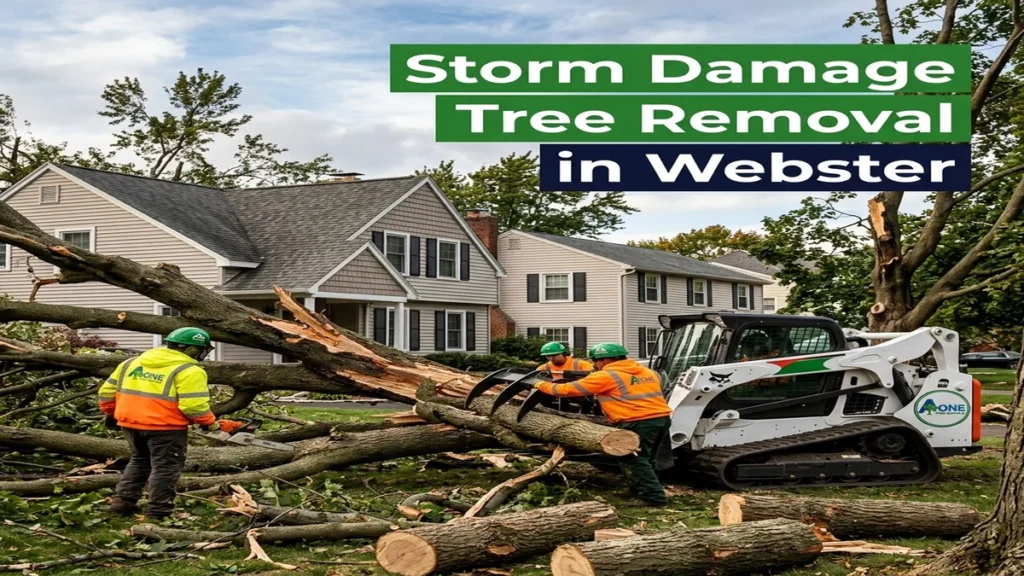
Webster sits close enough to Lake Ontario that its weather doesn’t always match the rest of Monroe County. A storm that barely grazes Henrietta can knock down half a silver maple on Holt Road, and a lake-effect squall in November can drop wet, heavy snow on trees that haven’t even finished dropping their leaves yet. If you’ve got a split limb hanging over your driveway or a tree leaning toward the house after the last system rolled through, here’s what’s actually happening and what to do about it.
Why Webster Takes a Different Kind of Hit
Being on the lake shore cuts both ways. Lake Ontario’s open water generates its own wind systems, and Webster catches the brunt of northerly gusts that pick up speed over open water with nothing to slow them down until they hit the shoreline. In late fall and winter, that same lake effect produces sudden, heavy snow bands that can dump far more snowfall on Webster in a few hours than areas just a short drive south see all week. Combine that with the sandy, well-drained soil common near the lakeshore, and you get root systems that don’t always anchor trees as firmly as the clay-heavier soil further inland — which means more trees going over in high wind, not just losing branches.
The Specific Failure Patterns We See in Webster
- Wind-thrown trees near the shoreline — sustained northerly gusts off the lake can uproot trees that would hold in more sheltered inland yards.
- Early lake-effect snow load — heavy, wet snow on trees still holding leaves in late October or November snaps limbs that would otherwise flex under drier winter snow.
- Ice glaze on exposed properties — open lots near the water with less windbreak tend to accumulate ice more evenly across the whole canopy, adding weight everywhere at once instead of just on exposed branches.
What to Do in the First 24 Hours After Storm Damage
- Photograph the damage from multiple angles before anything is moved or cleared — your insurance adjuster will want this.
- Check for downed lines anywhere near the tree or debris field and stay well clear if you see any, even if they look dead.
- Look for cracks at the trunk base or major limb unions — a tree that’s still standing can still fail hours or days later.
- Call your insurance company to report the damage and ask what documentation they require before cleanup begins.
- Get a professional assessment before assuming a leaning or partially uprooted tree is stable enough to leave alone.
Why Lakeside Properties Need Extra Caution With Cleanup
A tree that’s partially uprooted near the lake shore can look stable while the root plate is actually still shifting, especially in the loose, sandy soil common in Webster’s waterfront neighborhoods. Removing storm debris from underneath before the tree itself is stabilized or removed is one of the more dangerous mistakes we see homeowners make after a storm. Our crews handle the assessment and removal together so nothing gets disturbed in the wrong order.
Preventing the Next Round of Damage
Webster homeowners who get ahead of storm season tend to fare much better than those who wait. Removing dead or weak limbs before a major wind event, thinning dense canopies so wind passes through instead of catching the whole crown, and identifying trees with root or trunk decay before they’re tested by a storm all reduce the odds of an emergency call. If you’re not sure where your property stands, our tree trimming service includes an assessment of storm vulnerability as part of the visit.
Frequently Asked Questions
Why does Webster seem to get hit harder by storms than nearby towns?
Webster’s position along Lake Ontario exposes it to wind and lake-effect snow bands that weaken or bypass communities further from the shoreline. The open water also means less natural windbreak for properties close to the lake.
Is a leaning tree after a storm always an emergency?
Not always, but any new lean, visible root heaving, or soil cracking around the base should be treated as urgent until a professional confirms otherwise. A tree that looks stable can still be one gust away from coming down.
Will my homeowners insurance cover storm-damaged tree removal in Webster?
Most policies cover removal if the tree damaged a structure or blocked a driveway, but coverage for a downed tree with no property damage varies by policy. We recommend calling your insurer directly and documenting everything before cleanup starts.
Do you offer emergency service specifically in Webster?
Yes. We dispatch crews throughout Webster and the surrounding lakeshore communities. You can see our full coverage details on our Webster NY tree service page, or call (585) 888-9232 directly for urgent situations.
How is this different from general storm cleanup elsewhere in Monroe County?
The mechanics of wind and snow load are different closer to the lake, which is why we assess Webster properties with the shoreline’s specific weather patterns in mind rather than applying a one-size-fits-all approach. For general storm response steps that apply county-wide, see our guide on what to do after storm damage.