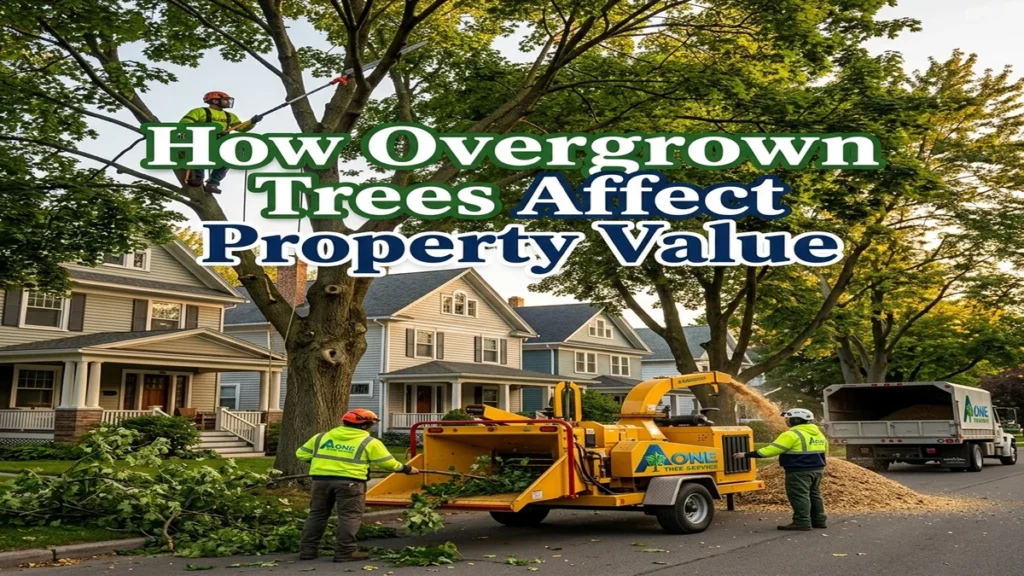
A buyer pulls up to a listing, and before they’ve even parked, they’ve formed an opinion based on what’s in the yard. An overgrown silver maple swallowing half the front of the house, or a hedge line that’s turned into a wall of unmanaged growth, tells a story about the whole property — and it’s rarely the story a seller wants told. Overgrown trees don’t just look neglected; they create real, documentable problems that show up in appraisals, inspections, and insurance quotes.
The First Impression Problem
Real estate agents will tell you curb appeal sells houses before a buyer ever walks through the front door. Trees that block windows, shade out the lawn entirely, or crowd the entrance signal deferred maintenance to a buyer even if the interior is immaculate. Overgrown landscaping reads as “the whole property has been let go,” whether or not that’s actually true — and buyers price in that assumption before they’ve asked a single question.
What Shows Up on the Inspection Report
A home inspector isn’t grading your landscaping taste — they’re looking for risk, and overgrown trees generate several specific flags:
Common Inspection Issues Tied to Overgrown Trees
- Roof and gutter contact. Branches touching or overhanging the roofline get noted as a maintenance item and a moisture risk, since trapped leaves and constant limb contact wear down shingles.
- Foundation proximity. Large trees planted too close to the house raise root-intrusion concerns, particularly with species known for aggressive root systems near foundations and sewer lines.
- Deadwood and structural defects. Inspectors will flag visible dead limbs, cracks, or leaning trees as a safety liability the buyer should address before or shortly after closing.
- Blocked sightlines and drainage. Overgrown roots and canopy can interfere with grading and drainage patterns the inspector is also evaluating around the foundation.
The Insurance Angle Sellers Often Miss
Some insurers will decline to write a new homeowners policy, or will require remediation first, if a large dead or visibly hazardous tree is close enough to a structure to pose a foreseeable risk. This can stall a closing entirely if it surfaces during the buyer’s insurance shopping — a step that increasingly happens earlier in the process than it used to. A tree that’s simply overgrown but healthy usually isn’t a dealbreaker, but a dead, split, or leaning tree near the house very much can be.
If You’re Listing Soon, Don’t Wait for the Inspection to Find Out
Have your trees assessed before you list, not after an inspector flags something during a buyer’s contingency period. Addressing an issue proactively is a maintenance line item; addressing it mid-negotiation is a concession that comes out of your final sale price.
What Well-Maintained Trees Actually Add
This cuts both ways. Mature, properly maintained trees are a genuine selling point — they add shade, privacy, and the kind of established character that a newly built subdivision can’t replicate for decades. The difference between an asset and a liability usually comes down to maintenance: canopy raised and thinned so it reads as intentional rather than encroaching, deadwood removed, and a clear line of sight to the house from the street.
Getting Ahead of It Before You List
If you’re preparing to sell, or just want your property to hold its value over time, a few targeted steps make a measurable difference:
- Have any dead, cracked, or structurally compromised trees near the house evaluated for removal.
- Raise and thin canopies that are blocking windows, sightlines, or the front entrance.
- Grind old stumps that are still visible in the yard — a leftover stump reads as unfinished work to a buyer.
- Clear branches away from the roof and gutters well before a home inspection is scheduled.
Our tree trimming and stump grinding services are two of the most common requests we get from homeowners prepping to list, and both tend to pay for themselves in how the property shows.
Frequently Asked Questions
Can overgrown trees actually lower an appraisal value?
Appraisers primarily assess comparable sales and structural condition, but agents and buyers factor curb appeal and inspection findings into their offers well before an appraisal happens. A tree issue is more likely to affect the offer price and negotiation than the formal appraised value itself.
Should I remove large trees entirely before selling, or just trim them?
Healthy, well-placed mature trees are usually worth keeping and simply maintaining — they add value most new landscaping can’t match. Removal makes sense for trees that are dead, diseased, or growing dangerously close to the structure. We can advise on which category a given tree falls into.
Will a home inspector fail a house over tree issues?
Inspectors don’t issue pass/fail results, but they will document tree-related risks such as roof contact, deadwood, or root concerns near the foundation, and buyers frequently use those notes to request repairs or a price adjustment.
How far in advance of listing should I have trees addressed?
Ideally a few weeks before photos and showings begin, so the work has time to settle and debris is fully cleared. If a removal is involved, allow extra time for stump grinding and any resulting lawn repair.