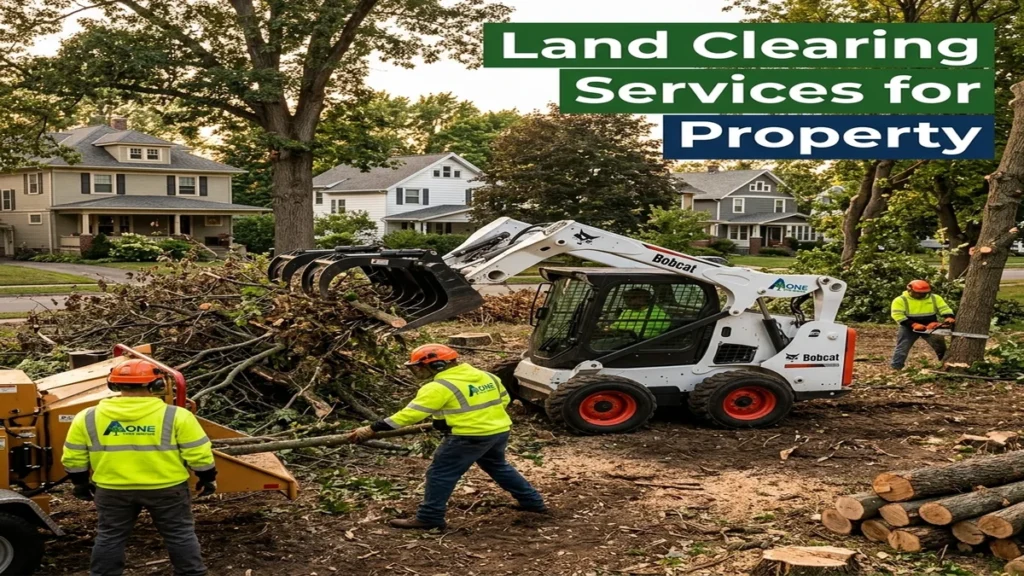
Whether you’re prepping a lot for a new build, expanding a driveway, or finally reclaiming a half-acre of brush that’s taken over the back of your property, land clearing is usually the first project that has to happen before anything else can. Done wrong, with the wrong equipment, no debris plan, or without accounting for what’s underground, it can set a project back by weeks. Here’s what actually goes into clearing a residential or small commercial lot in Monroe County, and how to know how much clearing your project really needs.
When Land Clearing Actually Makes Sense
Not every overgrown lot needs full clearing. The right scope depends on what you’re building and what’s already there.
Common reasons Rochester-area property owners call for land clearing:
- New construction or an addition — building departments typically require a clear building envelope plus a working perimeter for equipment, not just the footprint of the structure itself.
- Driveway or patio expansion — roots from trees near the planned path can undermine grading and paving within a few years if they aren’t cleared and ground down first.
- Reclaiming an overgrown lot — properties that sat vacant or unmanaged for several seasons often develop dense volunteer growth, such as buckthorn, wild grape, and invasive brush, that’s thicker and harder to remove than it looks from the road.
- Fire mitigation and defensible space — thinning dense tree stands and clearing dead brush near structures reduces fuel load, even in a climate like ours where wildfire risk is lower than out west but not zero during dry summer stretches.
- Pasture, garden, or usable yard space — converting wooded or scrubby acreage into something you can actually use.
What the Clearing Process Actually Involves
Land clearing is a sequence, not a single step, and skipping steps is usually what causes cost overruns later.
1. Site assessment and marking
Before any equipment moves, we walk the property to mark which trees come down, which stay if any are being preserved for shade or property value, and where utility lines, septic fields, or wells sit so nothing gets damaged.
2. Tree and brush removal
Larger trees are felled and processed first, followed by brush clearing and undergrowth removal. On denser lots this is often done in stages working from the access point inward, so equipment always has a clear path out.
3. Stump grinding
Leaving stumps in the ground isn’t just an eyesore. For construction or paving projects, an unground stump will eventually decay and leave a void that causes settling under a driveway, patio, or foundation edge. Stump grinding during the clearing phase avoids that problem entirely.
4. Debris removal and haul-off
Cleared material gets chipped, hauled, or, where the property owner wants it, left as usable firewood or mulch. We coordinate this based on what you want to keep versus what needs to leave the site.
5. Grading handoff
Once the lot is cleared and stumps are ground, it’s ready for your excavator or grading contractor to take over. We clear the way, not the final grade.
Check Before You Clear
Monroe County towns vary in what they require before land clearing on residential lots — some have tree preservation ordinances, wetland setbacks, or permit requirements tied to lot size. It’s worth a quick call to your local building department before work starts, and we’re happy to help you figure out what applies to your specific property.
Clearing a Small Lot vs. a Large Parcel
A quarter-acre suburban lot and a multi-acre rural parcel call for different approaches. Smaller, tighter lots usually mean more hand-clearing and careful equipment placement to avoid neighboring property and existing landscaping. Larger acreage allows for heavier equipment and faster mechanical clearing, but often has more variable terrain, wetter low spots, or established tree stands worth evaluating for selective clearing instead of clearing everything.
Getting an Accurate Estimate
Land clearing costs swing widely based on density of growth, tree size and count, terrain, and access for equipment. A flat, easily accessible lot with scattered brush costs a fraction of a densely wooded lot with limited truck access. We walk every site in person before quoting, because photos and satellite images consistently underestimate how dense undergrowth actually is at ground level. If tree removal is only part of what your project needs, we’ll scope that separately so you’re not paying for full clearing services you don’t need. See our full service area for the Monroe County towns we cover.
Frequently Asked Questions
How long does land clearing take for a typical residential lot?
A standard quarter- to half-acre residential lot with moderate brush and a handful of trees usually takes one to three days, depending on access and how much debris removal is involved. Larger or denser parcels take longer.
Do I need a permit to clear land in Monroe County?
It depends on your town and lot size — some municipalities require permits for clearing above a certain acreage or near wetlands and waterways. We recommend checking with your local building department before scheduling, and we can help point you in the right direction.
Can I keep some trees while clearing the rest of the lot?
Yes, selective clearing is common, especially for mature shade trees near where a house will sit. We mark and flag trees to preserve during the initial site walk so nothing gets removed by mistake.
What happens to the wood and brush after clearing?
It depends on your preference. Usable logs can be left as firewood, brush and smaller material can be chipped into mulch, or we can haul everything off-site if you want a completely clean lot.