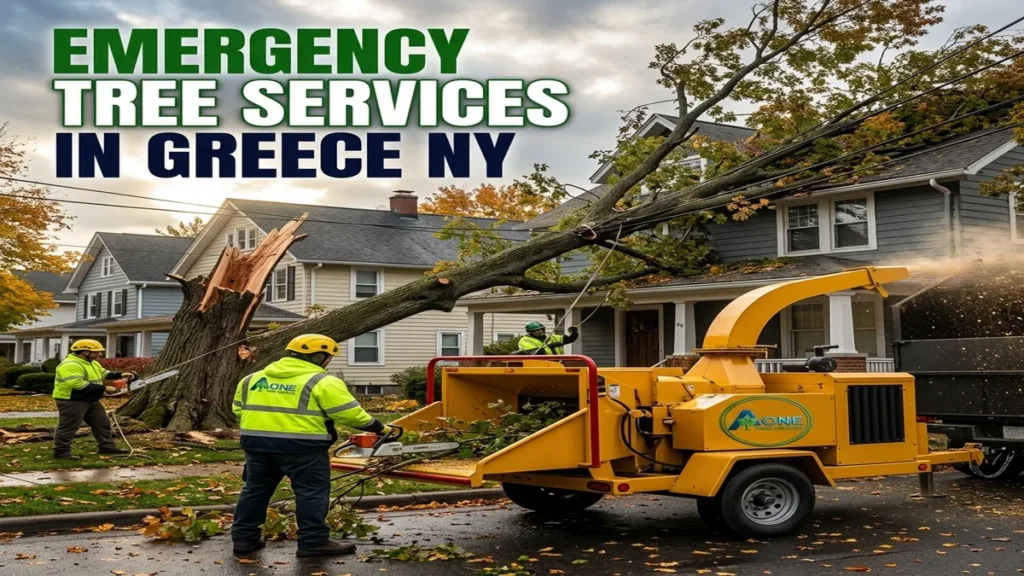
Greece sits right on the Lake Ontario shoreline, and that lakefront position means storms hit differently here than they do a few miles inland. Lake-effect snow bands can dump a foot of heavy, wet snow on Greece while towns further south get a dusting, and the open lake gives wind gusts room to build before they reach shoreline neighborhoods along Edgemere Drive, Latta Road, and the lakefront cottages further west. If you’ve got a tree down or hanging over your house right now, here’s what to do, and what to expect from an emergency crew responding in Greece specifically.
Why Greece Sees Different Storm Damage Than Other Monroe County Suburbs
Greece’s position directly on Lake Ontario changes both the type and timing of tree damage compared to towns further inland.
- Lake-effect snow bands can stall directly over Greece and dump wet, heavy snow at a rate that overloads branches fast — this kind of snow is far heavier per inch than the powdery snow further south and east, and it’s a leading cause of limb failure in the neighborhoods closest to the shore.
- Unobstructed wind off the lake hits shoreline properties and the first several blocks inland with more force than trees further from the water experience, which is part of why older, established trees along the lakefront often show more wind-related lean and root plate movement.
- Saturated soil near the shoreline and around Braddock Bay loosens root systems, making trees more prone to toppling in wind even without ice or heavy snow involved.
- Salt spray and road runoff near Route 104 and other high-traffic corridors can stress roadside trees over time, weakening them ahead of a storm that a healthier tree would have handled fine.
What to Do in the First Hour After a Tree Comes Down
1. Get everyone away from the tree and any power lines
Downed lines aren’t always obviously live, and a tree resting against a line can be energized even without visible sparking. Keep people and pets at a distance and treat any tree touching a line as dangerous until RG&E or a professional confirms otherwise.
2. Call it in, both the utility and us
If a line is involved, call RG&E first. For the tree itself, especially anything resting on your house, garage, car, or blocking your driveway, call our emergency line so we can get a crew routed to you.
3. Document before you touch anything
Photos of the tree, the damage, and the surrounding area help with insurance claims later. Don’t attempt to move debris that’s resting against your house — shifting weight can cause further structural damage.
4. Don’t run your own chainsaw on a leaning or hung-up tree
A tree caught in another tree’s branches, often called being “hung up,” or leaning against a structure is under tension that can release unpredictably. This is one of the most common ways homeowners get seriously hurt after a storm.
What an Emergency Response Looks Like in Greece
Because we cover Greece as part of our regular Monroe County service area, response times here match our other close-in suburbs — we’re not treating it as an outlying call. During active storm events, we prioritize calls involving structural damage, blocked emergency access, or trees resting on occupied structures first, then work through the rest of the queue. For homes closest to the water, around Greece Canal Park, Braddock Bay, and the Edgemere corridor, we’re familiar with the tighter lot access and older tree stock common in those established lakefront developments, which affects how we stage equipment.
After the Emergency: Don’t Skip the Follow-Up
Once the immediate danger is cleared, it’s worth having the rest of the tree and any neighboring trees checked. Storm stress can crack a trunk or loosen a root plate without the tree failing outright, which sets it up to come down in the next storm instead of this one.
Preventing the Next Emergency Call
If this storm wasn’t your first tree emergency, it’s worth a proactive look at the trees on your property before the next lake-effect system rolls through. Removing dead or structurally compromised trees ahead of time, and trimming back limbs that overhang the roofline, are the two changes that prevent the most emergency calls we get from Greece homeowners. Our Greece tree service page has more on our routine and emergency work in the area, and our guide on what to do after storm damage covers cleanup steps in more depth once the immediate danger has passed.
Frequently Asked Questions
How fast can you respond to an emergency in Greece?
Greece is within our standard Monroe County response area, so emergency dispatch times there match our other close-in suburbs. During major storm events affecting the whole region, we prioritize calls involving structural damage or blocked access first.
What should I do if a tree is leaning on a power line near the lake?
Stay well back, keep others away, and call RG&E immediately. Do not assume the line is safe just because you don’t see sparking. Call our emergency line separately for the tree itself once the utility has confirmed the line is de-energized or handled.
Does homeowners insurance cover emergency tree removal in Greece?
Most policies cover tree removal when the tree damages a covered structure like a house, garage, or fence, though coverage for a tree down in the yard with no structural damage varies by policy. We provide documentation and photos that help with claims either way.
Why does Greece seem to get worse storm damage than towns further inland?
Its direct exposure to Lake Ontario means lake-effect snow bands and lake-driven wind gusts hit shoreline neighborhoods harder and more directly than towns set back from the water, which is a real factor in how often we get emergency calls from the area.