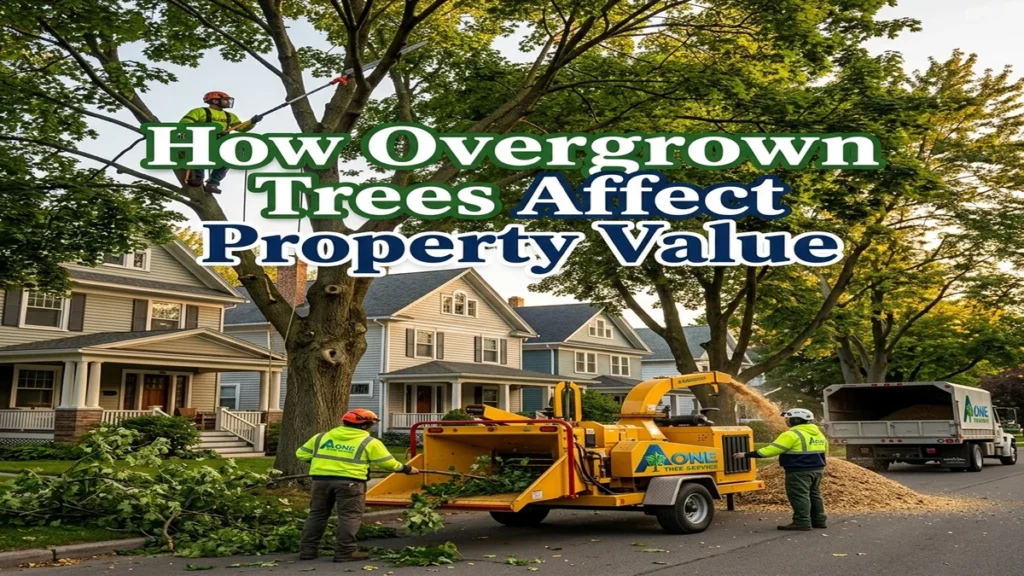
Overgrown trees affect a lot more than the view out of your kitchen window. They change how a house looks from the curb, what a home inspector writes down, what a buyer thinks when they walk the yard, and how much risk you are quietly carrying every time the wind picks up.
A good tree is one of the best things a property can have. A neglected one is a project, and buyers can usually tell the difference in about thirty seconds. This post walks through how overgrown trees hurt a home, the details buyers and inspectors notice, and the order to fix things in if you are thinking about selling in the Rochester area, or just want to keep what you already own in good shape.
What Counts as an Overgrown Tree
There is no single measurement, but you know the picture. Branches that rub the roof or hang over the chimney. A crown that blocks every window on the south side. A hedge that has swallowed the walkway. A maple you planted as a little whip twenty years ago that now dwarfs the garage.
Overgrown does not always mean too big. It can also mean too dense, too close to the building, or crowded by a neighbor tree competing for the same light. A tree that was a fine choice for a corner lot may be wrong now that the house has an addition or the driveway has moved.
How Overgrown Trees Affect Curb Appeal and First Impressions
Curb appeal is the first thing a buyer sees and the last thing most sellers think about. When trees grow over the roofline, the house looks smaller and darker. Moss and stains show up on shingles and siding. Walkways go in shade and stay damp. Gutters hold needles and seeds.
The reverse is also true. Mature trees that are pruned with care can make a house look established and calm. That is why older neighborhoods in towns like Brighton and Pittsford can look so good when the street trees are cared for, and so tired when they are not.
Trimmed trees also open sight lines to the front door and the house number, which matters for showings and for emergency vehicles. Buyers notice that without knowing why.
Where Overgrown Trees Affect Home Inspections
Home inspectors look at the roof, gutters, siding, foundation, and drainage, and trees are tied to all of them. An inspector who spots limbs over the roof may note possible abrasion, debris buildup, or moisture. A tree close to the house can be flagged as a risk to the roof, the foundation, or underground lines.
- Branches touching or overhanging the roof. They scrape shingles in wind and drop debris into valleys. See how tree trimming protects your roof.
- Dead or dying trees. A standing dead tree near the house is something an inspector will point to, and a buyer will worry about. Our post on why dead trees are dangerous explains why.
- Roots near the foundation, driveway, or walkway. Cracks and heaving can show up in the report. Read about how tree roots damage driveways and foundations before the inspection does it for you.
- Limbs near service lines. Utility lines are a safety issue and a repair issue.
None of those mean a deal collapses. They do give a buyer leverage, and a buyer who gets nervous may ask for a credit or a repair or just walk away. Fixing the problems before listing gives you control of the story.
The Insurance and Liability Side
Insurance companies care about trees because trees cause claims. Some insurers may ask about large trees close to a home, and a claim after a tree falls is easier to deal with when the damage is clearly from a storm and not from a tree that was obviously dead or hanging. Policies differ, so call your own insurer and ask what they expect. The Insurance Information Institute has general information for homeowners.
If a neighbor’s tree or yours drops a limb on someone else’s property, who is responsible can depend on whether the owner knew about the problem. That is a question for your insurer or an attorney, not a tree company, but it is another reason to deal with obvious problems before they become claims.
The Fix: A Sensible Order of Operations
If you are looking at a yard full of overgrown trees, do not start by cutting everything. Go in this order.
- Safety first. Deal with dead trees, hanging limbs, and trees leaning toward the house. These are the things that cause damage and the things a buyer will notice.
- Clearance next. Pull branches back from the roof, siding, chimney, and lines. Leave a gap so wind does not cause rubbing.
- Structure after that. Thin dense crowns so light and air get through. Remove crossing and rubbing branches. Good pruning follows industry standards that the ISA lays out for homeowners on Trees Are Good.
- Removal where it makes sense. Some trees are too close, too sick, or too large for the spot. Taking one out can improve the property more than trimming it for the tenth time.
- Finish with stumps and cleanup. A fresh stump looks unfinished. Grinding it and filling the hole gives you usable ground.
Not sure which way to go on a particular tree? Our post on tree removal vs tree trimming walks through the decision, and 8 signs a tree needs immediate removal covers the red flags.
Trimming Versus Removal and What It Costs
Trimming is usually the right answer for a healthy tree that has outgrown its space. Done correctly, it keeps the tree and fixes the problem. Done badly, with big flush cuts or topping, it creates new problems. See the benefits of professional tree trimming for the difference.
Removal makes sense when the tree is dead, structurally unsound, or in the wrong place. Costs vary with size, access, and what is under the tree, which is why we look at each job before quoting. If you want a general sense of what drives the price, read how much tree removal costs in Rochester NY, then ask for a free estimate for your specific situation.
Access matters too. A tree behind a fence in a tight backyard may need a spider lift rather than a bucket truck, and our crew works with spider lifts, bobcat loaders, and high capacity chippers so those jobs stay clean.
How Often to Keep Up With It
The cheapest way to prevent overgrown trees from affecting value is to not let them get there. Most yards do well with a look every year and some pruning every few years, depending on the species. Fast growers like silver maple and willow need more attention than slow growers like oak. We cover timing in how often you should trim trees in Rochester NY.
If you are getting ready to sell, start early. A few weeks of lead time lets you do the work in the right season, get the debris hauled off, and let the lawn recover before photos get taken.
Frequently Asked Questions
Do overgrown trees lower my home value?
They can. Trees that crowd the house, hide the front door, or look neglected can turn off buyers, and dead or leaning trees can show up in an inspection report. Well kept mature trees usually help. A professional look can tell you which category yours fall into.
Should I trim or remove trees before selling my house?
Start with safety and clearance. Remove dead or hazardous trees, pull branches back from the roof and walls, and thin the rest. Leave healthy mature trees that look good, and ask a crew for an honest opinion on the borderline ones.
Will a home inspector flag trees near my roof?
Often yes. Inspectors commonly note branches touching the roof, debris in gutters, dead trees, and roots near the foundation. Dealing with those items before listing can keep them out of the report.
How much does it cost to fix an overgrown yard?
It depends on how many trees, their size, access, and whether stumps need grinding. Because every yard is different, we give a free on site estimate instead of quoting by phone.
Can overgrown trees cause insurance problems?
Possibly. Insurers can ask about trees near the house, and a tree that was obviously dead or damaged can complicate a claim. Check with your insurance company about what they expect and what your policy says.
When is the best time to deal with overgrown trees?
Hazards should be handled right away. For general shaping and thinning, many Rochester homeowners schedule work in the dormant season, but a crew can advise based on the species. Start early if you plan to sell.
If you are wondering how overgrown trees affect your property, the quickest answer is a free walkthrough. Call (585) 888-9232 or request a free estimate, and we will tell you what to trim, what to take out, and what to leave alone. We also offer tree trimming and tree removal across Monroe County.