
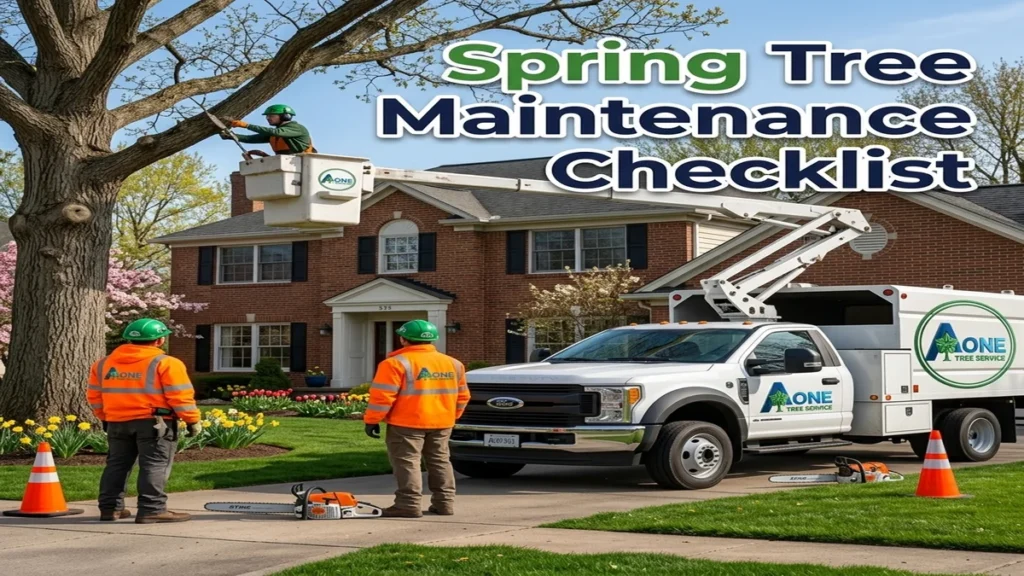
A good spring tree maintenance checklist starts before the first leaf opens, while the snow is still melting off the north side of the house and the lawn is a soggy mess. That’s the window when winter’s damage is easiest to see and cheapest to deal with. Wait until the canopy fills in and a cracked limb can hide in the foliage until the next thunderstorm.
Rochester trees take a beating from November through March. Lake effect snow stacks weight on branches, ice glazes them, and winds off Lake Ontario keep flexing every joint. Here is how we’d work through a yard in April and May, in the order that makes sense, with notes on what you can handle yourself and what really needs a crew.
Start With a Slow Walk After the Thaw
Before you buy mulch or sharpen pruners, do a lap of the property with a coffee and your eyes up. The goal isn’t to fix anything yet. It’s to build a list. Look at each tree from at least two sides, in good light, and from far enough back to see the whole crown.
You’re hunting for the things that don’t correct themselves: hanging or broken branches, a new lean, peeling bark, cracks along the trunk, and branches that have rubbed together all winter. Take photos as you go. If you ever need to make an insurance claim or compare how a tree looks year to year, those pictures help a lot. Our post on how winter weather damages trees in Rochester shows what ice and snow loads do, which makes the damage easier to recognize.
The Damage Assessment Part of Your Spring Tree Maintenance Checklist
Once you’ve done your lap, sort what you saw into three piles: fix now, watch, and call a pro. Roughly speaking:
- Fix now: hangers (broken limbs stuck in the canopy), cracked branches over a driveway, patio, or play area, and stubs left from earlier storms
- Watch: small wounds, minor bark scrapes, and slow leaf out on one side of the tree that may just need more time
- Call a pro: anything over the roof, near service lines, higher than you can safely reach from the ground, or involving a split trunk or a fresh lean
Trees with included bark, which is where two trunks form a tight V, are the ones that tend to split under ice. If you notice a crack at a fork or one half of a tree sagging, don’t wait for the leaves to answer the question. An early assessment is part of what our seasonal tree inspections are for, and a free on site estimate is how we start.
Prune at the Right Time, and Only What You Need To
Spring is a busy pruning season, but it isn’t a free for all. Dead, broken, and diseased wood can come out any time you notice it. Beyond that, timing depends on the tree. Many shade trees do well with structural pruning in late winter or just before buds swell, when the branching is easy to see. Maples, birches, and walnuts bleed sap in spring, which looks alarming but is usually cosmetic. Spring blooming trees such as dogwood and crabapple are best pruned right after flowering so you don’t cut off the show.
The bigger risk is over pruning. Taking off a quarter or more of a tree’s leaf area in one go, or topping it to cut size, stresses the tree and invites weak, fast growing shoots that break in the next storm. If you want help sorting out the timing, our post on the best time to trim trees in Rochester NY covers each season, and our spring tree trimming page explains how we approach it.
Mulch, Water, and Soil: The Quiet Jobs That Matter Most
If we could only convince homeowners to do one thing, it would be proper mulching. Spread two to three inches of wood chips in a wide ring under the canopy, pulled back a few inches from the trunk so the bark stays dry. A pile of mulch against the trunk, the so called mulch volcano, holds moisture against the bark and invites rot and pests.
Check how your soil drains too. Heavy clay stays wet in April and then bakes hard by August, which is tough on roots. Don’t pile fresh soil over the root zone when you regrade a flower bed, and keep heavy equipment and parked cars off the area under big trees. If you plan any digging, call 811 first. The Dig Safely New York site explains how to request a utility mark out before a shovel goes in.
Watch for Pests and Disease as Leaves Open
Spring is when trouble starts to show in the canopy. Late leaf out, thin crowns, branches that never bud, and dead twigs scattered through an otherwise healthy tree are all clues. Ash trees deserve special attention in our area because emerald ash borer is a real regional threat. Thinning at the top of the crown, woodpecker damage on the bark, and small D shaped exit holes in the trunk are worth reporting. The emerald ash borer information network explains how to identify the insect and what treatment options exist.
For local questions about pests and plant problems, Cornell Cooperative Extension of Monroe County is a reliable source. Don’t assume a bare branch is dead until the tree has had a chance to leaf out fully, but if a tree is clearly failing, it’s time to talk about removal.
Check the Roof, Wires, and Everything Under the Canopy
Spring is also the season to look at what your trees are doing to your house. Branches rubbing a roof scrape off shingle granules, clogged gutters collect twigs and seed pods, and limbs near service lines need a professional, not a pole saw. We cover the roof side in detail in our post on how tree trimming protects your roof.
Also look at the ground. Stumps left from last year’s removals are trip hazards and bug habitat, and sprouts coming up around them mean the stump is still alive. If you have an old stump to deal with, our stump grinding service takes it below grade so you can reseed or plant.
Plant, Replace, and Plan for Next Year
Spring is a fine time to plant, as long as the ground isn’t frozen or waterlogged. Pick a tree that suits the space, because a silver maple under a power line or a spruce a few feet from a foundation is a problem you’re buying for the next thirty years. Our guide to the best trees for Rochester NY properties is a good place to start, and the Arbor Day Foundation has planting guidance for beginners.
A new tree needs regular water through its first couple of summers, not just a drink on planting day. Stake it only if the root ball is moving, and remove the stakes within a year so the trunk can build strength.
When to Call a Professional Instead of Doing It Yourself
Plenty of spring chores are fine for a weekend: mulching, raking, clipping a few low branches. But the moment a task involves a ladder, a chainsaw above shoulder height, or anything near wires, the math changes. Our post on DIY versus professional tree trimming lays out where the line sits.
That’s where our tree trimming crews come in, with climbing and rigging gear, spider lifts for tight backyards, and chippers that handle the brush. If your checklist turns up a tree that’s beyond saving, we also handle tree removal, and our storm damage tree removal team can clear anything left over from a winter storm.
Frequently Asked Questions
When should I start my spring tree maintenance checklist?
As soon as the snow is gone and the ground is walkable, usually before trees leaf out. That is when broken limbs and structural problems are easiest to see, and it gives you time to schedule work before the busy season.
Is spring a good time to prune trees in Rochester?
For many shade trees, late winter to early spring before buds swell is a good window. Spring flowering trees are better pruned right after they bloom, and dead or broken wood can be removed any time.
How much mulch should I put around a tree?
Aim for two to three inches of wood chips spread in a wide ring, kept a few inches back from the trunk. Piling mulch against the bark holds moisture there and can lead to rot.
How can I tell if a tree is dead or just late to leaf out?
Give it time, since some species leaf out later than others. A scratch test on a twig, bark that is peeling away in sheets, brittle branches, or a tree that stays bare well after its neighbors are all signs worth having checked.
Can I get a free estimate for spring tree work?
Yes. A One Tree Services offers free estimates for tree trimming, removal, and stump grinding across Rochester and Monroe County. Call (585) 888-9232 or use the contact form to book a visit.
Use this spring tree maintenance checklist as a starting point, then let us handle the parts that need a crew. Call (585) 888-9232 or send a note through our contact page for a free estimate.