
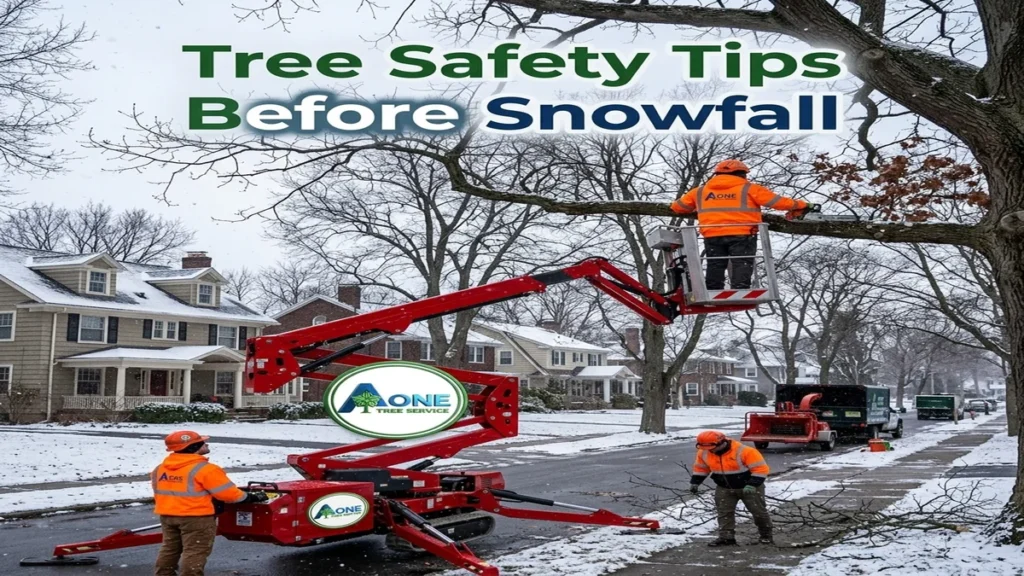
These tree safety tips before heavy snowfall are for the evening when the forecast changes. The lake effect band is lining up over your side of Monroe County, the grocery store is out of bread, and you suddenly remember the big maple that hangs over the garage.
There is no time left for a full pruning job, and that is fine. What you have is a few hours to find the trees most likely to cause a problem, protect what is underneath them, and decide who you will call if one goes. This post is the short, practical version of that evening, plus what to do once the snow is falling and the morning after.
Why Heavy Snow Hurts Trees Around Rochester
A cubic foot of wet snow is surprisingly heavy, and a mature tree holds a lot of surface for it to land on. Every twig becomes a shelf. Add a coat of ice underneath and the load stacks up while the branch has to stay put. On top of that, lake winds push on the whole crown, so a limb carrying snow is also being leveraged back and forth.
Trees that still hold leaves are in the worst spot. An early storm in October or November catches silver maple, Norway maple, and Callery pear in full leaf, and those leaves act like sails and sponges. You can see the pattern in our write up on how winter weather damages trees in Rochester. The National Weather Service Buffalo office, which covers Rochester, posts watches and warnings at weather.gov/buf, and it is worth checking before you walk the yard.
Tree Safety Tips Before Heavy Snowfall: The Fifteen Minute Walkaround
Grab a flashlight if it is getting dark, and look at the trees the way a crew would. You are not judging overall health. You are looking for the one limb or trunk that is most likely to give up tonight.
- Limbs already touching the roof, gutters, or service line. Snow will push them lower. Contact that is marginal today can turn into real damage by midnight.
- Cracked or hanging branches from an earlier wind storm. These break first, because the wood is already compromised.
- Tight V shaped forks. Two stems growing up and apart from the same spot, with bark squeezed between them, split under load. Maples and Callery pears are famous for it.
- Leaning trees. Look at the soil at the base. Raised mounds or small cracks on the downhill side mean roots may already be loosening.
- Evergreens bent under snow. White pine and spruce hold snow well until they do not. Look for branches already drooping.
Photograph anything that worries you. Dated photos from before the storm help if you need to talk to an insurer later, and they help us understand what we are walking into if you call.
What to Move or Protect Underneath
Another of the simplest tree safety tips before heavy snowfall is to change what sits in the line of fire. You may not be able to fix the tree tonight, but you can reduce what a failure would hit.
Move cars out of the driveway or off the street under big trees, and park them in the open or in the garage. Pull outdoor furniture, grills, and bikes out from under overhanging limbs. If a branch could reach a shed or a play set, clear the area around it, and tell the kids the yard is off limits until it is checked.
Do not wrap, tie, or prop up a heavy limb. It looks helpful, but it puts you right under a branch that may drop. Leave tonight’s decisions to what you can safely do from the ground, which mostly means moving things out of the way.
Branches Near Power Lines: Look, Do Not Touch
The most dangerous problem in a snowstorm is a tree that touches a line. Heavy snow pulls a limb down and across a service drop, or a whole tree leans into the wires. A downed line can stay energized and does not always spark or hum.
Stay at least a full tree length away from anything touching a line. Keep kids and pets inside. Report the line to your utility, and wait until the lines are made safe before any tree work goes near them. The Ready.gov winter weather page and the National Weather Service winter safety page cover storm preparation for the whole household, and are worth a look if you have not already built a basic kit.
Safe Things You Can Do During the Storm
Once snow is falling, your best tool is distance. Stay out from under trees. Keep an eye on them from a window, and move bedrooms away from any wall a heavy tree could hit if you can. If you hear loud cracks, listen to where it is coming from before going outside.
Do not shake snow off shrubs or small trees unless you can do so gently from the side and nothing is overhead. For small shrubs like arborvitae, a light brush upward with a broom can free packed snow, but frozen branches can snap if you pull hard.
If a limb comes down and nothing is touching it, leave it until daylight if it is safe to do so. A tree crew is not going to be better off working in the dark on a limb that is not hurting anyone, and working in the dark is how accidents happen.
The Morning After: Check Before You Dig Out
When the snow stops, walk the yard slowly before shoveling. Look up first. A branch can be hung in a crown and covered in snow, ready to drop when the sun warms it or when you bump the trunk.
Check the roofline, the gutters, and the service mast. Look for bark peeled from a split, new leans, or soil lifted around the base. If a tree looks wrong, tape off the area under it. Do not park there, and do not let kids use the sled hill beneath it.
For limbs that are down and clear of lines and structures, you can usually deal with small pieces yourself, but anything big enough that you cannot lift with one hand is a job for a crew. Our winter storm tree cleanup page and the post on what happens when you call for emergency tree service explain what to expect from the call onward.
Getting Ahead of the Next Storm
The best tree safety tips before heavy snowfall are the ones you use in October. A little work in the fall, not the night before, makes the difference. Tree trimming done well removes dead wood, shortens heavy limbs, and thins the crown so snow and wind pass through. Our fall checklist in how to prepare trees for winter walks through what to look for.
Some trees are past the point where trimming helps. A trunk with a big cavity, a leaning tree with lifted roots, or a dead ash is better taken down on a dry autumn day than during a blizzard. That is a tree removal conversation, and a free estimate does not commit you to anything.
Frequently Asked Questions
Should I knock snow off my tree branches?
Usually no. Frozen branches are brittle and can snap, and you may be standing right under the weight. A gentle upward brush on a small shrub is okay, but leave large trees alone and call a crew if a limb looks overloaded.
Which trees are most likely to break under heavy snow?
Silver maple, Callery pear, and trees with tight V shaped forks tend to split. Trees still holding leaves in early storms are at higher risk, and so are trees that already have cracks or dead wood.
What if a branch is touching a power line?
Stay far back and treat the line as live. Keep people and pets away and call your electric utility. After the line is made safe, call a tree crew to deal with the branch.
Can I wait until morning to deal with a fallen limb?
If the limb is clear of lines, the house, and any exit, waiting for daylight is usually the safer choice. If it is on the roof, on a line, or blocking you in, call the 24/7 line at (585) 888-9232 right away.
Is it worth trimming before winter if the tree looks healthy?
Often yes. Removing dead wood and heavy overextended limbs lowers the load the tree has to carry. A free on site look from a crew can tell you whether trimming, cabling, or removal makes the most sense.
How do I get an estimate before the snow comes?
Call (585) 888-9232 or use the contact page. We offer free estimates and can look at the trees you are worried about, then explain what we would do and why.
If you want a second set of eyes on your trees before the next big storm, call (585) 888-9232 or request a free estimate. Taking care of the weak spots now makes tree safety tips before heavy snowfall a lot easier to follow when the forecast turns. If a tree is already down, our emergency tree removal team is available 24/7.